Car keys · Stamford Centre
Car Key Replacement in Stamford Centre
The car is yours now, but somebody else still holds a key to it. Adding another key is not enough; you want the old ones to stop working the vehicle so the question is settled for good.
Car Key Replacement
In plain words
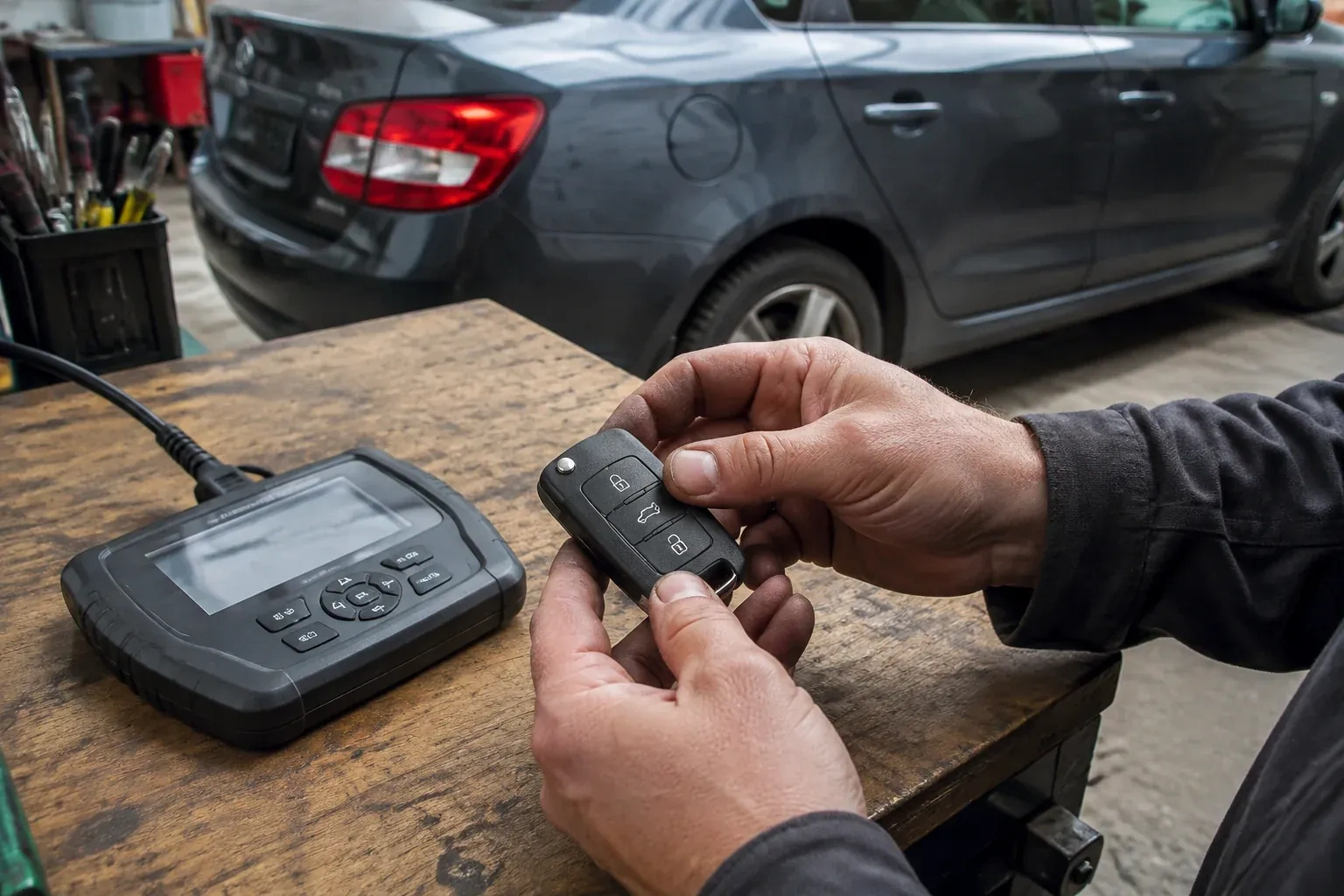
Car key replacement means producing a key that works your specific vehicle when the original is lost, broken, stolen or no longer recognized. On many modern cars that is more than cutting metal: the blade fits the locks, a transponder is taught to the immobilizer before the engine will run, and any remote or proximity function is paired separately; some current vehicles instead use a phone key or key card with no cut blade at all. An automotive locksmith confirms your entitlement, identifies the exact key system from the VIN, cuts the blade to code, programs the electronics and tests every function before handing it over.
How the visit goesYou bought the car privately and it came with a single key on a shoelace. Every time it leaves your hand you notice, and you would like a second one made before the first goes missing.
Stamford Centre
How the visit goes
Parts and data lined up before the tools come out
Some vehicles hand over their security data readily; others require a PIN pulled from the car, a code from the manufacturer, or a procedure only the dealer's tooling can run. The locksmith confirms which applies to your VIN before committing to a key, and confirms the part is available: fobs are specific to frequency, part number and sometimes trim level, and a wrong one programs and then refuses to work the doors. For the systems that use manufacturer secure data, access is arranged through the industry's Vehicle Security Professional registry, which is why the ownership record is completed properly first. Nothing is cut until this line-up is clear.
All keys lost: reset first, then reissue
When nothing remains, the sequence changes. The car is opened, the blade is produced from the lock or the code, and then, where the system supports it, the immobilizer memory is reset so every stored key is erased; others follow their own maker-specific route instead. New keys are then registered one after another, and registering two gives the car a spare from day one. On some vehicles this stage needs a longer security timer or manufacturer data, which is arranged in advance. The old keys, wherever they are, are now unknown to the car. Each new key is then started and driven a short distance to confirm the reset held.
A spare, and the reason to keep it away from the car
Two working keys change the shape of every future visit. With one in hand, adding another is a short programming routine; with none, the car has to be opened, decoded and reset. For that reason the locksmith will usually suggest making the spare while the tools are out, and will suggest a home for it that is not the glovebox, the console or a magnetic box under the bumper. A drawer at home, a trusted family member or a small lockbox all work. Test the spare every few months so a flat coin cell is discovered on a Sunday afternoon rather than in a parking lot.
Car Key Replacement
In the van
- Code-cutting machine
- Decoding pick and lock reader
- Remote-head key shell
- Laser-style milling cutter
- Remote frequency tester
What affects the quote
Same fees day, night or weekend
1One working key or none
A spare added beside a working key is a shorter routine. Starting from nothing means working through whatever that vehicle's own all-keys-lost procedure calls for, commonly opening the car, decoding the lock and resetting the immobilizer, and the quote reflects those extra stages.
2Year, make and model
The vehicle decides the blank, the chip and the programming route. A twenty-year-old sedan with a plain transponder key and a recent proximity-start model are different jobs, and the quote follows the VIN rather than a flat figure.
3Battery and access to the car
A flat vehicle battery needs a maintainer during programming, and a locked car with no key has to be opened before the diagnostic port can be reached. Both are small items that the quote names plainly.
Car Key Replacement: questions
My fob is cracked but still works. Do I need a whole new key?
Usually not. A cracked case often protects a healthy circuit board and transponder, and those can be moved into a new shell of the same pattern with a freshly cut blade. Because the electronics are unchanged, nothing needs programming, and the rebuilt key behaves exactly as before. A new key is the answer when the board is corroded, a button has died or the chip has been damaged.
What is a transponder key, and does my car have one?
A transponder is a small chip in the head of the key with no battery of its own. When the key is in the ignition, or the fob is inside the cabin, the immobilizer sends a signal and the chip answers with a code; if the code is unknown, the engine is prevented from running. Every new light vehicle sold in Canada since September 2007 has been required to have an immobilizer, so almost any car from that time on uses one.
Do you use original manufacturer fobs or aftermarket ones?
Both exist, and the locksmith will say which is proposed for your car. Original parts match the vehicle exactly and are the safer choice for the newest systems and for features like remote start or phone pairing. Well-made aftermarket keys and fobs are widely used on common models and suit spares and older vehicles. What matters in every case is the correct frequency, part number and chip type, which the VIN confirms.
Car Keys
- Spare Car Key DuplicationThe blade on the everyday key has gone shiny and thin along one edge, and lately it needs a wiggle…
- Key Fob ProgrammingEvery fob for the car disappeared at once inside a bag that was never recovered, and the vehicle…
- Transponder Key ProgrammingThe new key slides into the ignition and turns exactly the way the old one did, but the engine only…
Car Key Replacement near you
The services below cover most of what a door in Stamford Centre can throw at you. Some are urgent, like a lockout or a snapped key. Others are planned, like upgrading to a high-security cylinder or setting up a master key system for a small building. Each one is explained in plain terms so you know what to expect.