Change or rekey · Niagara Falls
Vintage Mortise Lock Service
The key turns freely in the round cylinder on the door, all the way around and back, without the bolt shifting at all. The cylinder itself wobbles slightly when you press it, as if it has come loose inside the door.
Vintage Mortise Lock Service
In plain words
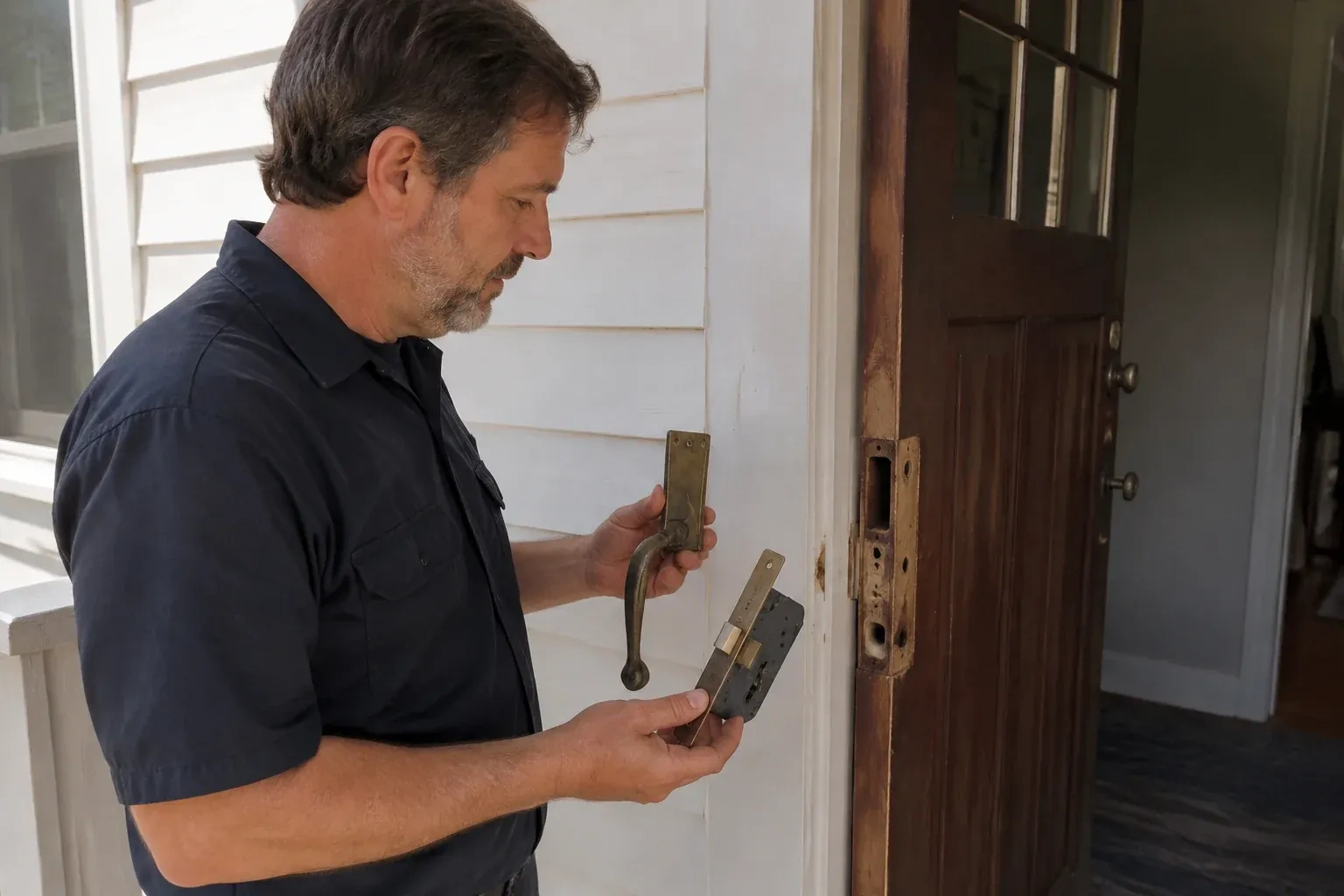
Where the door has moved, the lock gets blamed. Solid wood doors in older houses swell in humid weather, shrink in winter and settle on their hinges, and a mortise lock that was set decades ago ends up with its latch and bolt aiming a little below the strike. Part of every vintage lock service is reading how the door hangs, tightening or packing the hinges, and moving or filing the strike so the latch catches and the bolt throws without lifting the handle. Often that alignment work, plus a clean and new springs, is the entire repair, and the customer gets back a door that closes with one hand.
How the visit goesThe key turns freely in the round cylinder on the door, all the way around and back, without the bolt shifting at all. The cylinder itself wobbles slightly when you press it, as if it has come loose inside the door.
Niagara Falls
How the visit goes
Bit key or cylinder
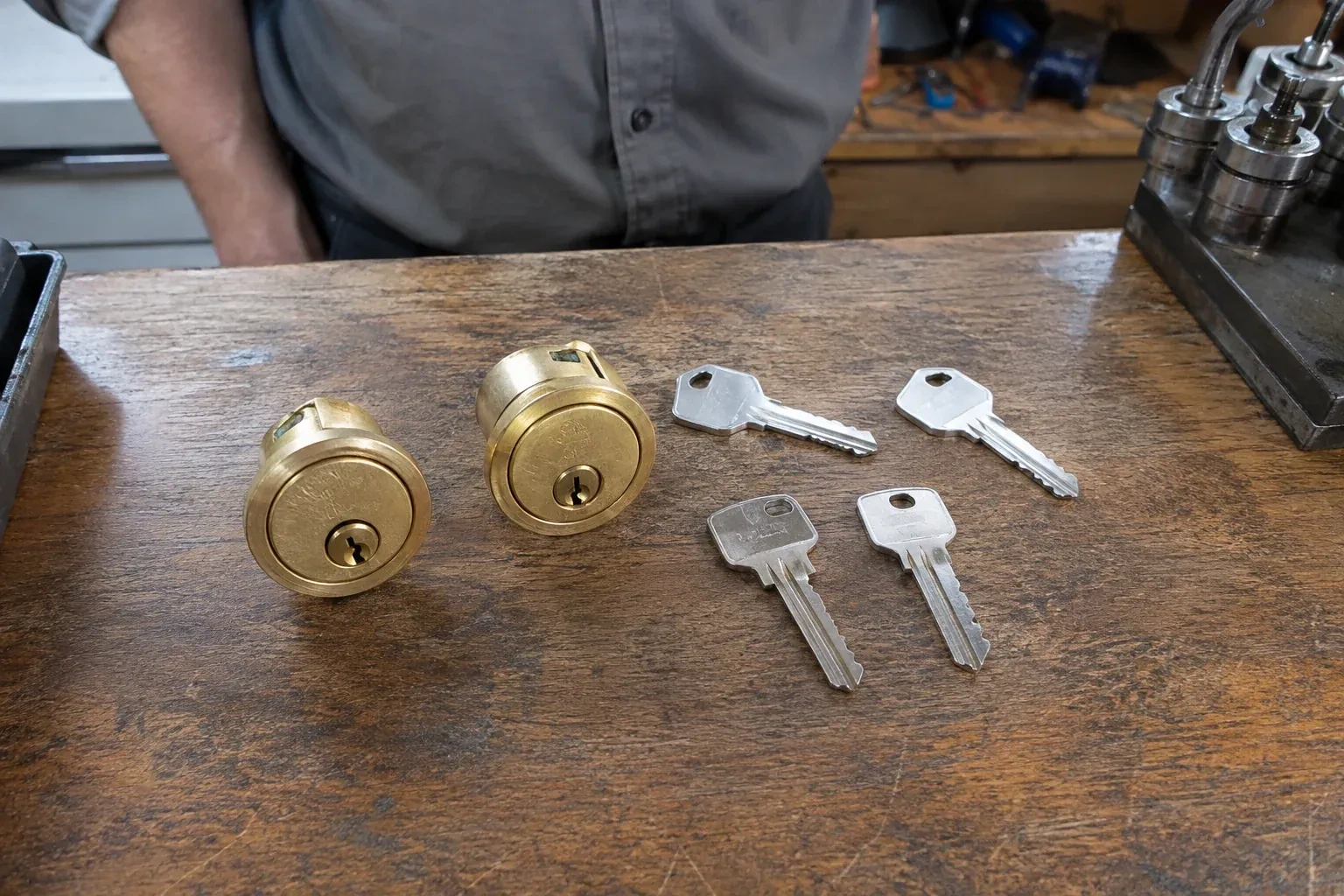
Older mortise locks come in two families, and the check sorts out which one is on the door. A keyhole shaped like a small keyhole silhouette takes a bit key, the skeleton key style, and the case works on wards and levers that the key's bit must match. A round face on the door with a slot for a flat key is a pin-tumbler cylinder threaded into the case. The distinction matters for everything that follows: how a lost key is replaced, whether the lock can be rekeyed, and what to do if the mechanism is worn out. It also settles whether a spare can be filed on the bench or cut on a key machine.
Cutting a bit key to the lock
For a bit-key lock, keys are made to the case rather than copied from a pattern. A blank with the right bow, shank and bit size is chosen, then the bit is filed by hand to clear the wards inside the case and to lift each lever to the correct height. The key is tried, marked, filed again and tried again until it turns the bolt cleanly from both sides. A second key is made to match while the first is fresh. Where a working original exists, it is used as a guide and the new key is cut to it, and a worn original can itself be gently restored if the customer wants to keep using it.
Watching the door through the seasons
The lock is aligned to the door as it hangs today, and a solid wood door in an older home will move again. Through a humid summer it swells, through the heating season it shrinks, and each year the hinges settle a fraction. Twice a year, close the door and try the latch and bolt; if either has started to scrape or needs the door lifted, the strike wants a small adjustment or the hinge screws want snugging, which is a five-minute job. Doing that early keeps the rebuilt case from being strained, and it is the single habit that makes a vintage lock last another few decades without fuss.
Vintage Mortise Lock Service
In the van
- Bit key blanks
- Dry graphite or PTFE lubricant
- Warding files
- Deadbolt lever springs
- Cylinder set screw
What affects the quote
Same fees day, night or weekend
1Strike and hinge work
Where the door has dropped or swelled, adjusting or moving the strike and tightening or packing hinges is part of the fix. It is small work but it is listed, so you see what was done to the door.
2Extras you choose on the day
A high-security cylinder, a lockbox for a spare bit key or a separate modern deadbolt above the original are optional additions. None is required to make the old lock work, and each is priced as its own line.
3Paint and seized parts
Hardware buried under decades of paint takes time to free and clean without damage. A faceplate, strike and thumb-turn that have to be stripped back add to the visit and are noted in the quote.
Vintage Mortise Lock Service: questions
Which parts usually need replacing?
Springs, first and foremost: the latch spring, the hub spring that returns the knob, and the small springs on the deadbolt levers. After that, the spindle and knob set screws, a hub whose square has worn round, a worn deadbolt lever or follower, and on later locks the cylinder set screw or the cylinder itself. Bolts, cases and trim are almost always kept, cleaned and refitted rather than replaced.
Will the door look any different afterwards?
Usually not, when the original case is repaired: the same knobs, escutcheons, faceplate and strike go back on in the same positions, and the only visible change is paint or grime cleared from the edges that were catching. A replacement case is chosen to match the pocket so original trim is reused wherever spacing allows, though an occasional case needs a small pocket or fixing change, explained beforehand.
What exactly is a mortise lock?
It is a lock built as a flat rectangular case that sits inside a pocket cut into the edge of the door, rather than through a round hole bored across it. The case holds the latch, usually a deadbolt, the hub the knob spindle turns, and the springs. On the faces of the door you see the knobs, decorative plates and either a keyhole for a bit key or a round cylinder. Most doors built before the middle of the last century carry one.
Change or Rekey Locks
Vintage Mortise Lock Service near you
Homes in Niagara Falls bring us sticking deadbolts, lost keys, moves and upgrades. Businesses bring storefront doors, back doors, key control and safes. The services below cover both sides in detail, so whichever kind of door you are standing in front of, the right page is a click away.