Change or rekey · Queensway Gardens
Vintage Mortise Lock Service in Queensway Gardens
The key turns freely in the round cylinder on the door, all the way around and back, without the bolt shifting at all. The cylinder itself wobbles slightly when you press it, as if it has come loose inside the door.
Vintage Mortise Lock Service
In plain words
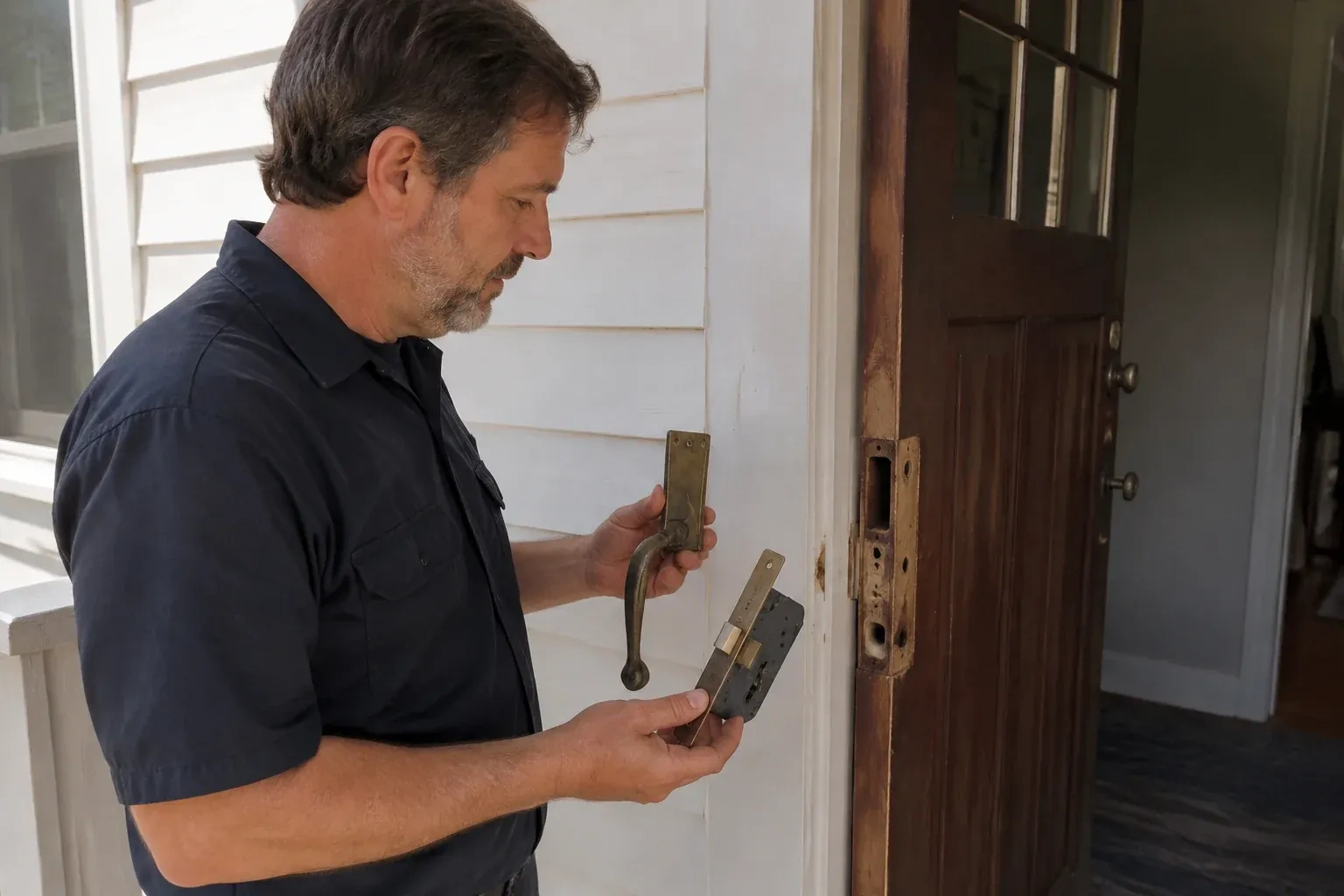
Vintage mortise lock service is the repair of the original lock in an older door rather than its removal. The lock is a rectangular steel case that lives inside a pocket in the door edge, and nearly everything that goes wrong with it, a tired spring, dried grease, a worn hub, a lost key, can be put right on the bench. The locksmith confirms you own or occupy the home, takes the case out through the door edge, rebuilds it, sorts out the keys and puts it back in the same pocket. The door keeps its knobs, escutcheons and history, and it locks as it did when new.
How the visit goesAfter a wet summer the entry door sits lower in its frame. The lock works perfectly when the door is open, but with it shut you have to lift the handle and shoulder the door to get the deadbolt to throw.
Queensway Gardens
How the visit goes
Who owns the door
The first check has nothing to do with the lock. The locksmith confirms that the person asking for the work owns the home or lawfully lives in it, since a serviced lock and a freshly cut key are, in the end, a way into someone's house. Photo identification and something tying you to the address usually settles it in a moment. On a rental, the landlord and the tenant are expected to agree on lock changes and share keys, so the locksmith asks who should hold the new bit keys or cylinder keys and notes it. This small formality protects the household as much as anyone, and it is done before a screwdriver comes out.
Reassembly and setting the trim
The case slides home and is screwed off, then the cylinder or keyhole escutcheon goes on, followed by the spindle, knobs and rosettes. The spindle is trimmed to length so the knobs sit against the door without pinching, and the set screws are tightened so there is no free play before the latch moves. The thumb-turn is aligned with the deadbolt tail so it throws with a light touch. Paint is cleared from the faceplate and strike edges where it was catching. Then the door is closed and the whole lock is worked from both faces with the key, the knobs and the turn, several times, listening for the latch to seat.
Parts, records and the house file
Anything that came out of the lock, a broken spring, a worn lever, the old cylinder, is offered to you rather than thrown away; some owners keep the originals with the house's papers. The locksmith leaves a short account of what was done: the case type and size, what was replaced, whether keys were made or a cylinder rekeyed, and how the strike was adjusted. For a designated heritage property this record shows the original hardware was retained. For everyone else it is simply the sheet you hand to the next locksmith, or the next owner, so nobody has to rediscover what is inside the door.
Vintage Mortise Lock Service
In the van
- Bit key blanks
- Dry graphite or PTFE lubricant
- Warding files
- Deadbolt lever springs
- Cylinder set screw
What affects the quote
Same fees day, night or weekend
1Replacement cylinder
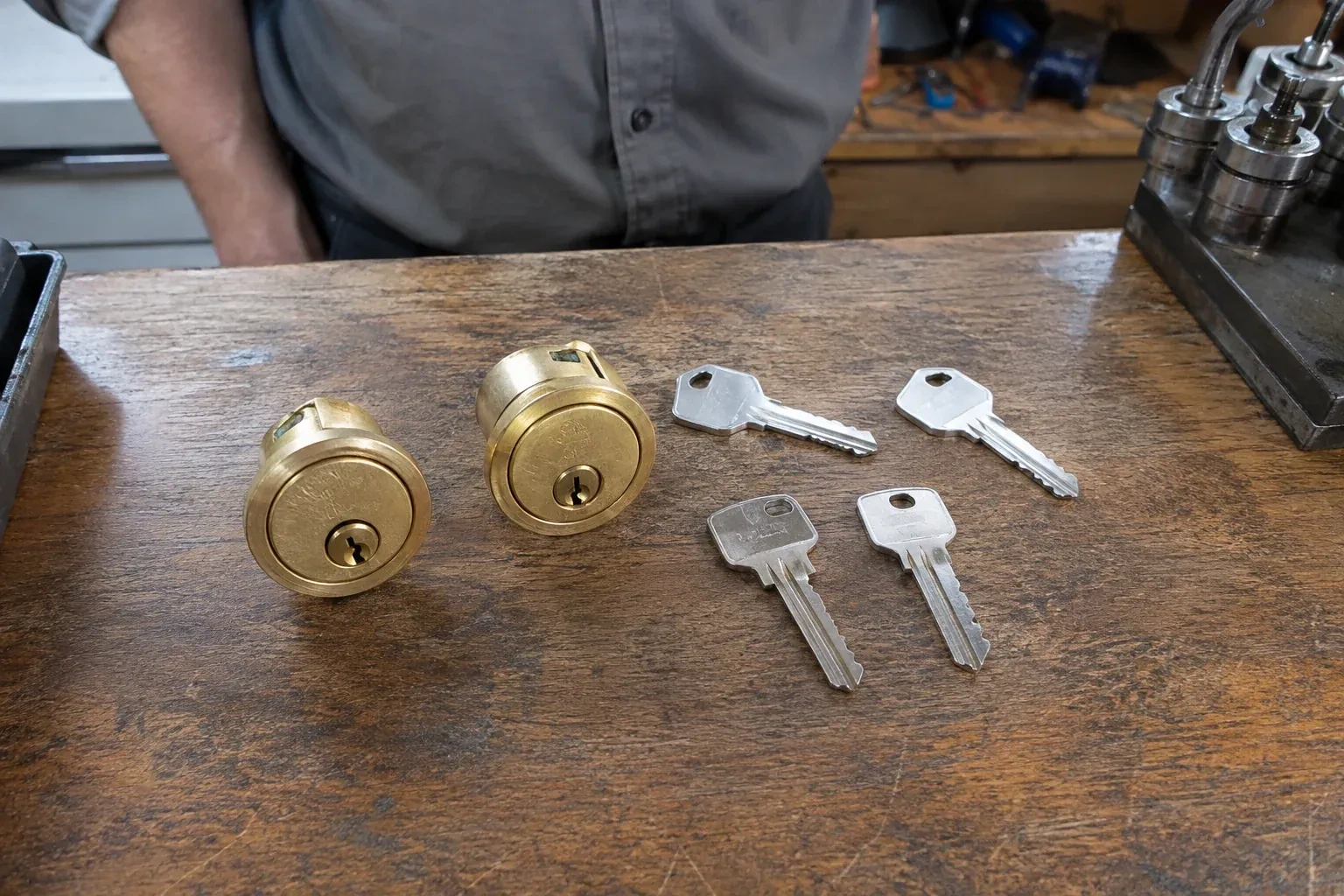
When a pin-tumbler cylinder is past rekeying, a new mortise cylinder of the right thread and cam is fitted. A standard cylinder and a high-security one are different hardware and are quoted as such.
2How many keys you want
Bit keys are made individually by hand and cylinder keys are cut per copy, so the count you ask for is a line of its own. Decide who in the household needs one before the visit.
3Extras you choose on the day
A high-security cylinder, a lockbox for a spare bit key or a separate modern deadbolt above the original are optional additions. None is required to make the old lock work, and each is priced as its own line.
Vintage Mortise Lock Service: questions
Which parts usually need replacing?
Springs, first and foremost: the latch spring, the hub spring that returns the knob, and the small springs on the deadbolt levers. After that, the spindle and knob set screws, a hub whose square has worn round, a worn deadbolt lever or follower, and on later locks the cylinder set screw or the cylinder itself. Bolts, cases and trim are almost always kept, cleaned and refitted rather than replaced.
Will the door look any different afterwards?
Usually not, when the original case is repaired: the same knobs, escutcheons, faceplate and strike go back on in the same positions, and the only visible change is paint or grime cleared from the edges that were catching. A replacement case is chosen to match the pocket so original trim is reused wherever spacing allows, though an occasional case needs a small pocket or fixing change, explained beforehand.
What exactly is a mortise lock?
It is a lock built as a flat rectangular case that sits inside a pocket cut into the edge of the door, rather than through a round hole bored across it. The case holds the latch, usually a deadbolt, the hub the knob spindle turns, and the springs. On the faces of the door you see the knobs, decorative plates and either a keyhole for a bit key or a round cylinder. Most doors built before the middle of the last century carry one.
Change or Rekey Locks
Vintage Mortise Lock Service near you
Every lock service we provide in Queensway Gardens starts with the same first step, which is looking at the door properly before deciding anything. The individual pages below explain what that look involves for each job, how the work is carried out, and what to expect from the hardware afterwards.