Change or rekey · St. Davids
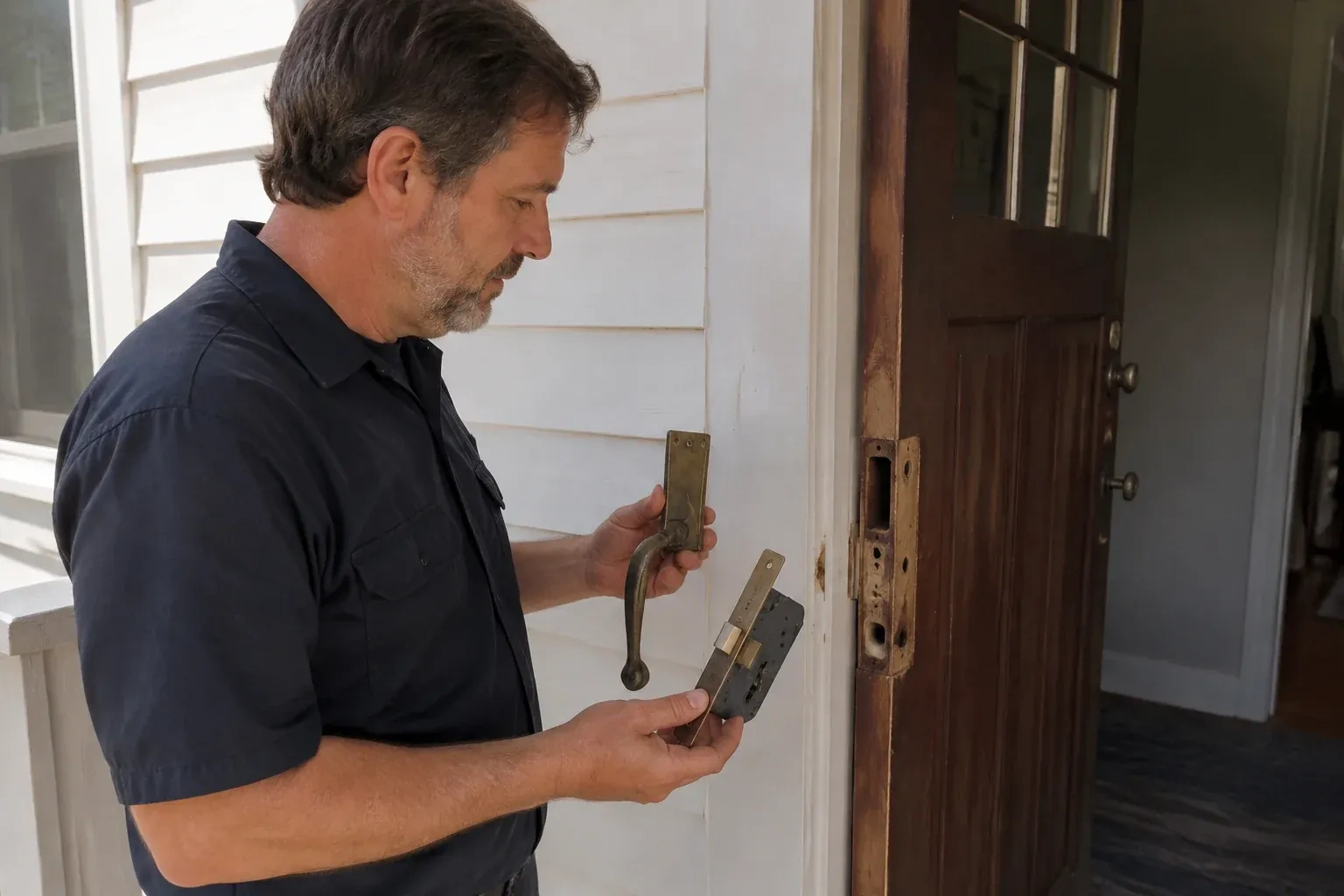
Vintage Mortise Lock Service in St. Davids
The key turns freely in the round cylinder on the door, all the way around and back, without the bolt shifting at all. The cylinder itself wobbles slightly when you press it, as if it has come loose inside the door.
Vintage Mortise Lock Service
In plain words
Servicing the original lock is usually the better choice for an older home, for practical reasons as much as sentimental ones. Cutting a period door for a modern cylindrical lockset means boring a large hole through the stile and leaves the old mortise to be filled; a repaired mortise case avoids all of that. Where the home is a designated heritage property, keeping the hardware may also be what the municipality expects. The service treats the door as something to preserve: minimal disturbance, parts matched to the original, a strike adjusted rather than replaced, and the old lock left running smoothly for decades to come.
How the visit goesSomeone painted the door years ago without removing the hardware. The faceplate, the strike and the little thumb-turn are all under several coats, the deadbolt scrapes when it moves, and the knob is stiff enough to leave marks on your hand.
St. Davids
How the visit goes
How the knob and key actually behave
A short conversation with the hardware comes next. The knob is turned and released: does it return smartly, sag back, or not return at all? Is there free play before the latch moves? The key is tried in the deadbolt with the door open: does the bolt throw fully, catch part way, or ignore the key while the key turns? The thumb-turn gets the same test. Each answer points somewhere different inside the case, a latch spring, a hub spring, a worn hub square, a deadbolt lever, a cylinder cam, and the locksmith is building a short list of likely parts before the cover ever comes off.
Putting the door edge right
Before the case goes back, the pocket and screw holes get whatever attention the check turned up. Stripped holes are drilled out, plugged with glued hardwood dowel and re-drilled so the faceplate screws bite. A pocket that has loosened is packed with a thin hardwood shim glued to one wall so the case sits tight. A split at the edge is glued and clamped. None of this changes the door's appearance; it simply gives the rebuilt lock something solid to sit in, which matters because a case that shifts in its pocket will bind the spindle and undo the bench work in a few months.
A lock that feels new and looks old
What you get back is the door you had, with the lock working as it was designed to. The knob returns level with a snap, the latch catches when the door is pushed shut, the deadbolt throws with a light turn of the key or the thumb-turn, and the key goes in and out without a wiggle. Nothing on the face of the door has changed except that the brass has been cleaned where it was handled. The locksmith runs through each function with you from both sides before leaving, so the standard of what has been done is something you have seen, not something you have been told.
Vintage Mortise Lock Service
In the van
- Bit key blanks
- Dry graphite or PTFE lubricant
- Warding files
- Deadbolt lever springs
- Cylinder set screw
What affects the quote
Same fees day, night or weekend
1What is actually broken inside
A clean and new springs is the lightest job. A worn hub, a cracked lever or a part that has to be fabricated to match the original adds bench time, and the assessment names which applies before any of it starts.
2Making the inside key-free
Fitting a thumb-turn or interior release to a deadbolt that was keyed on both sides is its own small item, and one most owners of an entry door choose to include.
3Number of locks in the visit
One entry lock is the simplest case. A whole floor of interior latches, or the front and back doors together, is a longer visit, and each case is quoted on its own so the total is easy to follow.
Vintage Mortise Lock Service: questions
Which parts usually need replacing?
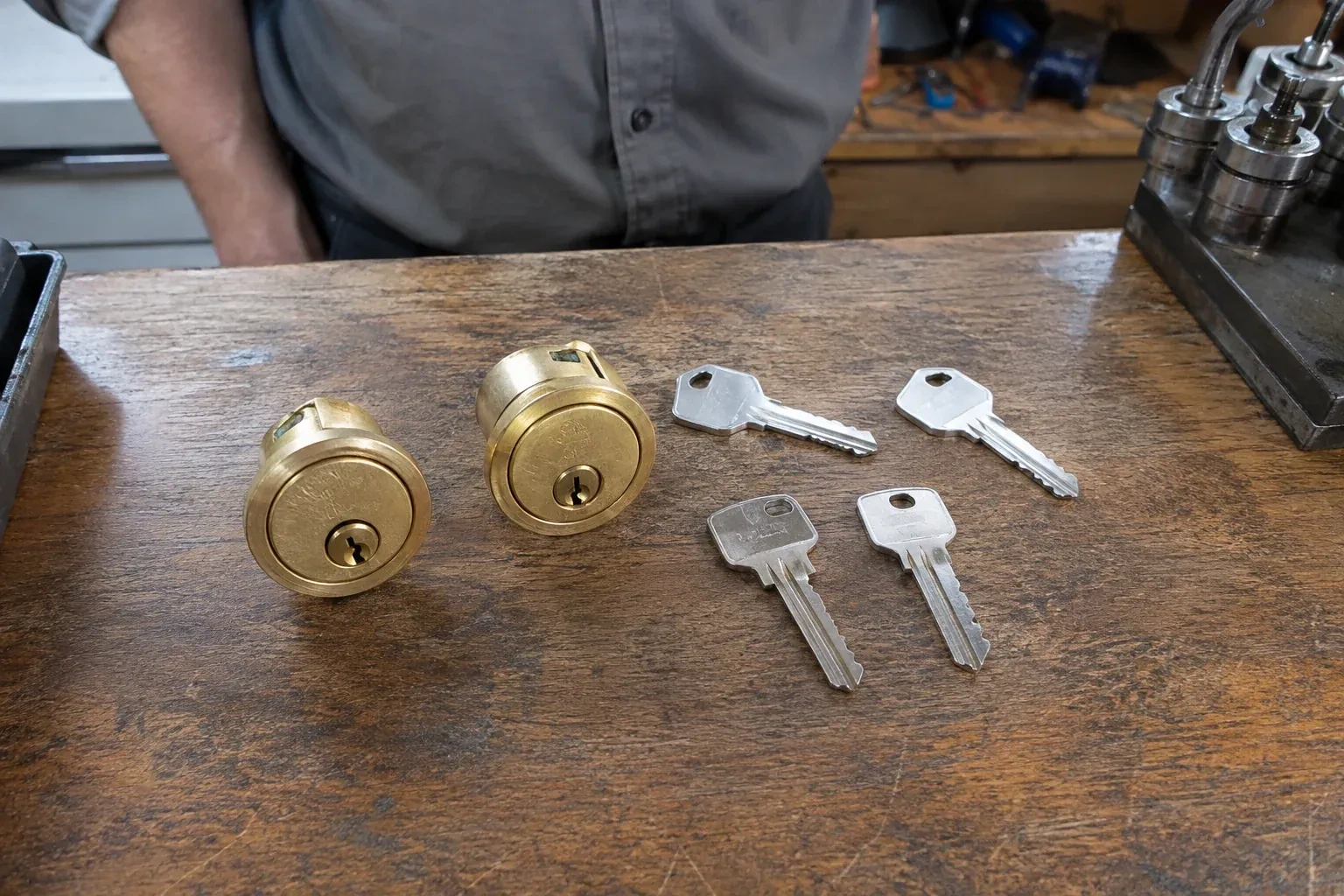
Springs, first and foremost: the latch spring, the hub spring that returns the knob, and the small springs on the deadbolt levers. After that, the spindle and knob set screws, a hub whose square has worn round, a worn deadbolt lever or follower, and on later locks the cylinder set screw or the cylinder itself. Bolts, cases and trim are almost always kept, cleaned and refitted rather than replaced.
Will the door look any different afterwards?
Usually not, when the original case is repaired: the same knobs, escutcheons, faceplate and strike go back on in the same positions, and the only visible change is paint or grime cleared from the edges that were catching. A replacement case is chosen to match the pocket so original trim is reused wherever spacing allows, though an occasional case needs a small pocket or fixing change, explained beforehand.
What exactly is a mortise lock?
It is a lock built as a flat rectangular case that sits inside a pocket cut into the edge of the door, rather than through a round hole bored across it. The case holds the latch, usually a deadbolt, the hub the knob spindle turns, and the springs. On the faces of the door you see the knobs, decorative plates and either a keyhole for a bit key or a round cylinder. Most doors built before the middle of the last century carry one.
Change or Rekey Locks
Vintage Mortise Lock Service near you
The services offered in St. Davids answer the questions a door eventually asks. Who else has a key? Why does the bolt drag? Would a stronger cylinder be worth it? Can staff leave without a key? How do I open the safe my father left? Each answer is on the pages below.