Commercial · Niagara Falls
Commercial Rekeying
The drawer behind the counter holds a tangle of keys with tape labels: front old, side, Dave. Some open things, some open nothing, and the hardware-store copies mean the true count drifted long ago past anything written down.
Commercial Rekeying
In plain words
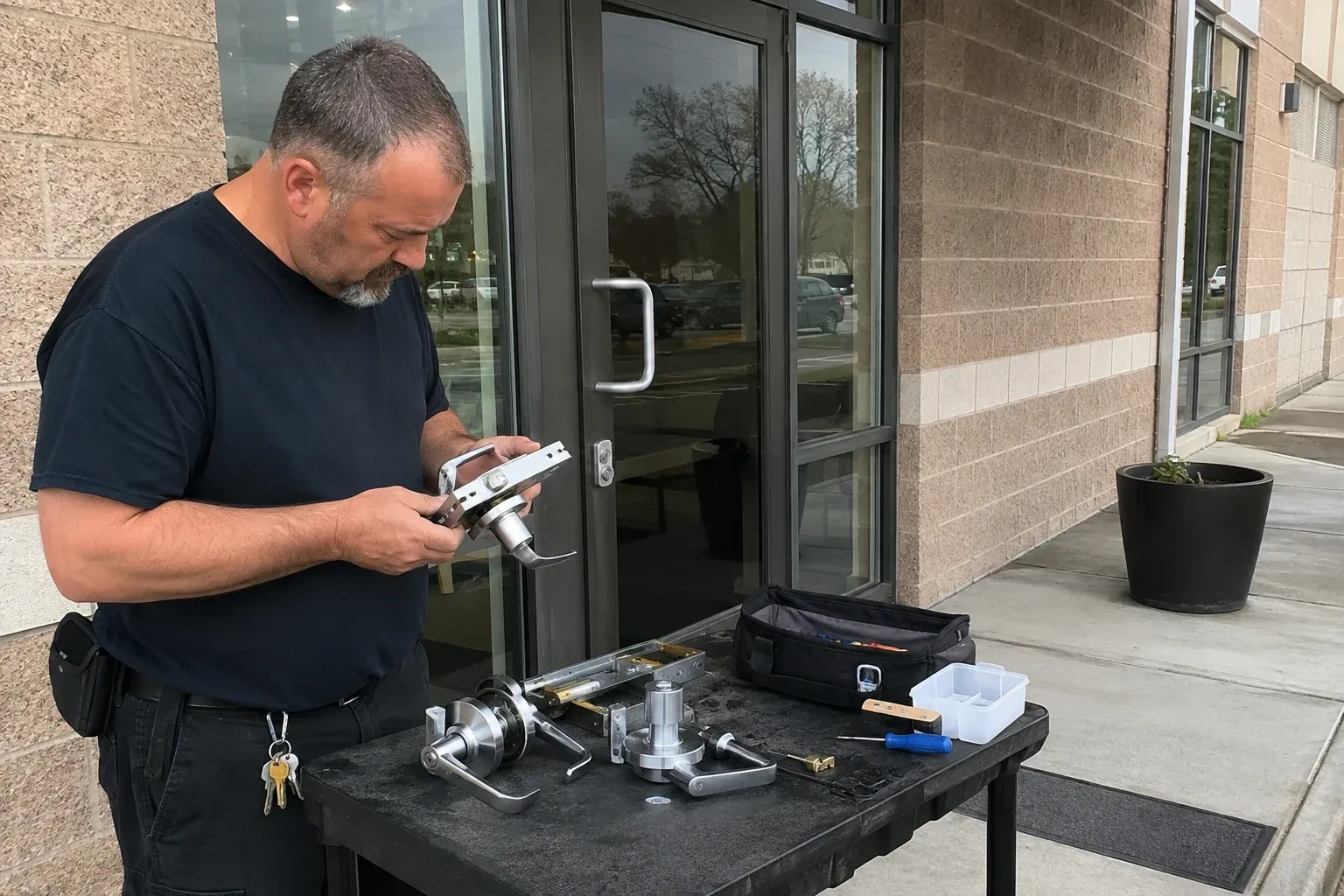
For most business doors, rekeying is the sensible middle path between doing nothing and buying new hardware. Commercial cylinders are built to be repinned many times, and a lever set, mortise lock or storefront cylinder in decent condition has years left in it. Rekeying keeps the finish, the door preparation and the handles you already have and changes only the small brass pins inside. Where a cylinder is worn, corroded by winter salt or too light for the room behind it, the locksmith says so and offers a replacement for that door alone; the rest are rekeyed to the new plan.
How the visit goesTwo people left over the summer and the keys they handed back came up one short. Nobody is sure whether the missing key was for the front door, the stockroom or both, and the sign-out sheet stopped being filled in a year ago.
Niagara Falls
How the visit goes
Who needs to open what
The keying plan is a picture of how the business runs, so the assessment asks who goes through which door on a normal day. Front-line staff need the customer entrance and perhaps the stockroom; supervisors add the office; the owner and the bookkeeper hold the cash room; the IT contractor reaches the server closet and nothing else. Out of that conversation come the key groups: doors keyed alike so one key covers a role, doors keyed differently where separation matters, and whether a master for the owner earns its place. The plan also names anything left out on purpose, so the chart shows both what changes and what stays.
Pinning the master and change keys
When the plan includes a master, each cylinder is pinned to accept two keys: its own change key and the master above it. Thin master pins sit in the pin stacks so the plug can turn at both the change key's height and the master's; master keying can also create extra, unintended combinations, so the locksmith charts the system to keep those from lining up with someone else's key, and the manager's key opens its whole group and nothing beyond it. A well-built system leaves unused combinations in reserve, so when the business adds a door or a department next year the new cylinder joins the plan without disturbing the keys already in people's pockets.
A keying chart in plain language
You leave the visit with a one-page chart that lists every opening by name, the key group it belongs to, the code stamped on that group's keys and how many were cut. It is written for the manager, not the locksmith: the stockroom is called the stockroom, and a glance shows that key group B opens the office and the cash room and nothing else. The bitting details that a locksmith needs to add a cylinder later are kept separately and securely. Pin the chart inside the manager's cupboard, keep a copy off site, and it becomes the reference every future key question is answered from.
Commercial Rekeying
In the van
- Plug follower
- Key stamp set and tags
- Standard and restricted key blanks
- Code key machine
- Master pins
What affects the quote
Same fees day, night or weekend
1Interchangeable cores versus repinning
Cores swapped with a control key are the shortest work on site, while cylinders that must come apart on a bench take longer. Supplying spare cores for the manager to hold is priced as its own line.
2Documentation and register
A keying chart, a key register and stamped codes on every key are part of a proper commercial rekey, and the quote names the paperwork so it is never skipped.
3Padlocks, cabinets and mailboxes
Small locks add up. Each padlock repinned to the door key, each cabinet keyed alike and each mailbox cylinder replaced is listed on its own so you can decide what to include.
Commercial Rekeying: questions
What is a master key system and does a small business need one?
In a master key system each lock accepts its own change key and also a master key above it, so a manager carries one key while staff carry keys that open only their own doors. Small businesses with three or four doors often manage without one. A master earns its place once there are several rooms with different people in them, or several locations, and the owner would otherwise carry a ring of keys.
How do you confirm I am allowed to have the locks changed?
For a business the locksmith looks for someone with standing: the owner, a director, or a manager who can show written authority from one of them. A lease, a business registration or a letter on company paper usually settles it, along with photo identification. Where doors belong to a landlord, the property manager's approval is asked for as well. This is a short step and it protects the business from having its own locks changed by the wrong person.
How long should we set aside for a commercial rekey?
It depends on the count and the mix. A shop with a front door, a back door and a stockroom is a short visit; an office suite with a dozen lever sets, a master key plan and a mailbox takes a good part of a day. Interchangeable cores are the shortest of all, since they are swapped rather than repinned on site. The locksmith gives a time estimate at the assessment, once every cylinder has been counted.
Commercial Locks
- Access Control InstallationAnother employee left and the keys never came back.
- Panic & Exit HardwareThe daycare wants the yard gate and the classroom door alarmed so a staff member hears the moment…
- Commercial-Grade Lock ReplacementThe kitchen delivery door gets shouldered open more than a hundred times a shift, and lately the…
Commercial Rekeying near you
Homes in Niagara Falls bring us sticking deadbolts, lost keys, moves and upgrades. Businesses bring storefront doors, back doors, key control and safes. The services below cover both sides in detail, so whichever kind of door you are standing in front of, the right page is a click away.