Car keys · Stamford
Transponder Key Programming in Stamford
The new key slides into the ignition and turns exactly the way the old one did, but the engine only cranks. A dashboard light blinks near the fuel gauge, and no amount of turning the key gets the car past that cranking sound.
Transponder Key Programming
In plain words
A modern car key is often two systems living in one housing: the transponder, a chip with no battery of its own that only the immobilizer needs to see, and the fob, a battery-powered remote that handles locking, unlocking and alarm functions from a distance. Programming a transponder key addresses the first system, letting the engine start, while pairing the fob addresses the second, restoring the buttons. A key can pass one test and fail the other, so both get checked before the visit is finished.
How the visit goesA second driver has joined the household, and the one existing key gets handed back and forth between two schedules that rarely line up. Everyone agrees another key would settle the daily handoff, but nobody has looked into how a modern ignition actually learns a new one.
Stamford
How the visit goes
Looking at the key itself
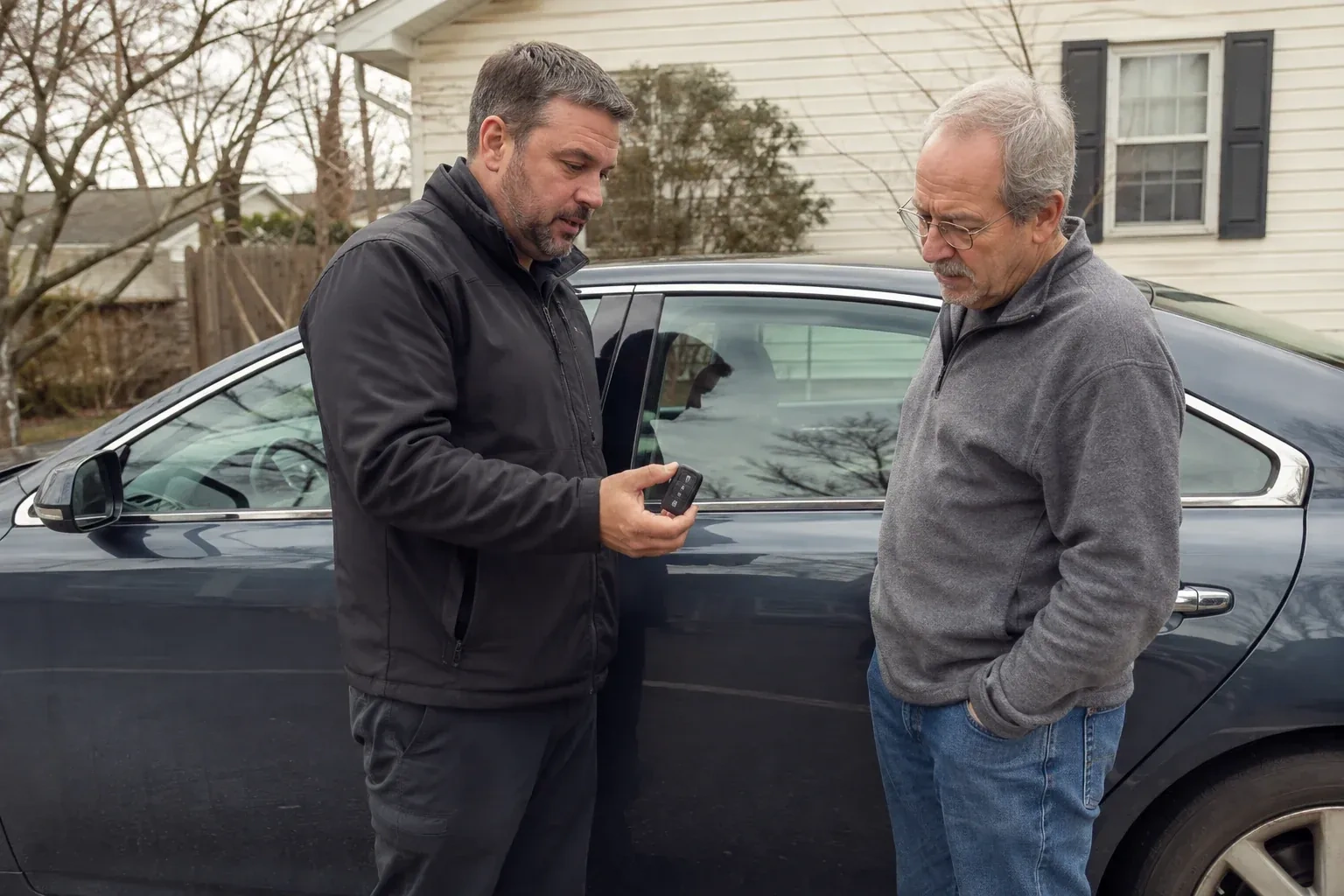
The physical key gets its own inspection. A blade is checked against the lock for wear, a remote-head or proximity fob is opened to check its battery and contacts, and any chip visible in the key head is checked for cracks or separation from the blade. A key that was cut at a counter kiosk but never programmed is common enough to check for specifically: the metal fits the lock perfectly, and the confusion is understandable when the same piece of plastic looks complete either way.
Bringing the fob back to life
When the vehicle uses a remote-head or proximity fob, the visit includes more than the chip: a fresh battery goes into the fob itself, the remote-entry and any push-button start functions are paired, and the small metal emergency insert is checked and demonstrated if the fob carries one. None of this is separate from the programming; a fob that starts the car but cannot lock the doors, or unlocks the car but leaves the driver stranded when the battery dies, has not finished the job.
Looking after the fob
A fob that has just been given a fresh battery and paired functions should be treated normally rather than babied, but a couple of habits extend its working life: avoid leaving it somewhere that gets very hot, such as a dashboard in direct sun, and replace the battery again at the first sign of a weak or intermittent response rather than waiting for it to fail outright. The metal emergency insert is worth testing once, so its location and its awkwardness are familiar before it is actually needed.
Transponder Key Programming
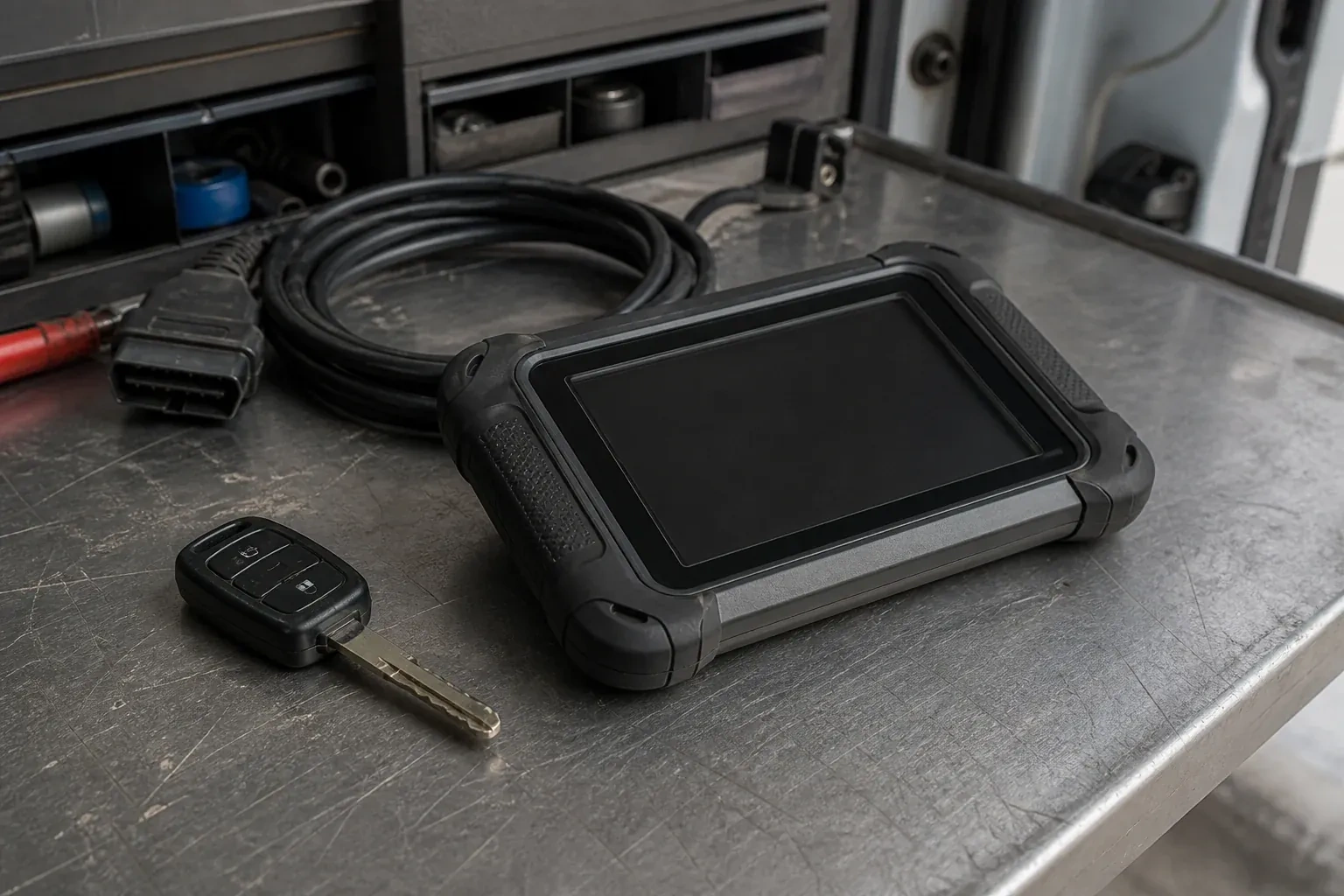
In the van
- Emergency insert blade
- Bench programming adapter
- Proximity smart key
- Key cutting machine
- VIN reference tool
What affects the quote
Same fees day, night or weekend
1Manufacturer-gated security access some newer vehicles require
A number of newer vehicles require an additional secure session with the manufacturer's own network before a key can be added, which is a real step in the process on those models rather than an optional add-on.
2Whether ownership documents are ready at the visit
Having a vehicle permit or registration and photo identification ready when the locksmith arrives keeps the visit moving directly into the vehicle work, rather than pausing partway through to confirm authorization.
3Type of key: blade, remote-head or proximity
A basic transponder blade, a remote-head key with buttons, and a push-button proximity key each involve a different amount of pairing beyond the immobilizer chip itself, which affects both the parts involved and the time the visit takes.
Transponder Key Programming: questions
Can a push-button, proximity-style key be programmed the same way?
Yes, though there is usually more to pair afterward: the proximity functions that let the vehicle detect the key nearby, alongside the same immobilizer identity a traditional transponder key would carry. The visit still ends with the same test, confirming the engine starts and the vehicle recognizes the key at a normal walking distance.
Can a vehicle from before transponder keys were common have one added now?
It depends on the vehicle and what its factory ignition system supports; some older models can accept an aftermarket immobilizer and matching transponder key, while others were never built with a compatible module at all. This is worth discussing model by model rather than assuming either answer, since the mechanical side of an older ignition is often the easier half of that conversation.
Does the fob need a new battery every time a key is programmed?
Not necessarily, but it is checked every time regardless. A battery that is already weak is often easier to replace during the same visit than to leave for another call later, and a marginal battery can make a freshly programmed fob look like it has a fault when the chip itself is working exactly as intended.
Car Keys
- Car Key ReplacementThe car is yours now, but somebody else still holds a key to it.
- Spare Car Key DuplicationThe blade on the everyday key has gone shiny and thin along one edge, and lately it needs a wiggle…
- Key Fob ProgrammingEvery fob for the car disappeared at once inside a bag that was never recovered, and the vehicle…
Transponder Key Programming near you
For people in Stamford who like to know before they call: these pages describe each lock service in detail, from the routine rekey to the less common safe opening or master key design. They explain the steps, the parts involved and the decisions you may be asked to make on the day.