Locksmith in St. Davids, OntarioMoving out?Hand over a clean slate.
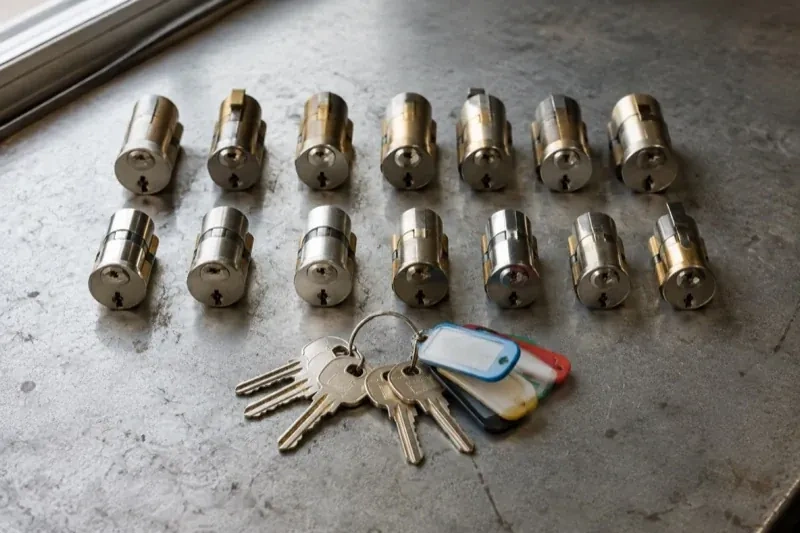
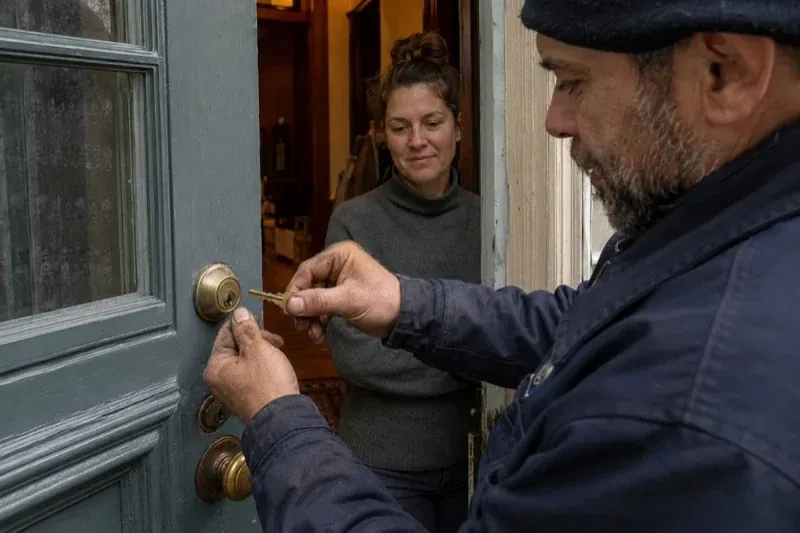
Selling or handing back a property in St. Davids goes more smoothly when the locks are fresh and every key accounted for. We rekey the exterior doors, gather the old keys, cut the set the next people will need, and give you a short written record to pass along with the paperwork.
Hardware for St. Davids homes is chosen for the door, not the catalogue. We look at the thickness, the bore, the backset, the swing and the finish already on the house, then bring options that fit without new holes or mismatched brass. The result looks as though it was always there, and it locks the way the door deserves.
— Clifton Locksmith Pros
Identity checked, politelyFor openings and key work we confirm you have the right to be there. We explain why we ask, and we ask everyone.
Work you can watchThere is nothing hidden about what we do. Stand beside us, ask questions, and we will show you what the lock looks like inside.
Clean hands, clean floorWe put down a mat where there is drilling, wipe the hardware down and leave the area as we found it, only with a working lock.
Hours
HoursOpen 24/7
Nights and weekendsSame fees
In business31 years
VisitsOn-site assessment
Locksmith services
Services we offer
The services offered in St. Davids answer the questions a door eventually asks. Who else has a key? Why does the bolt drag? Would a stronger cylinder be worth it? Can staff leave without a key? How do I open the safe my father left? Each answer is on the pages below.
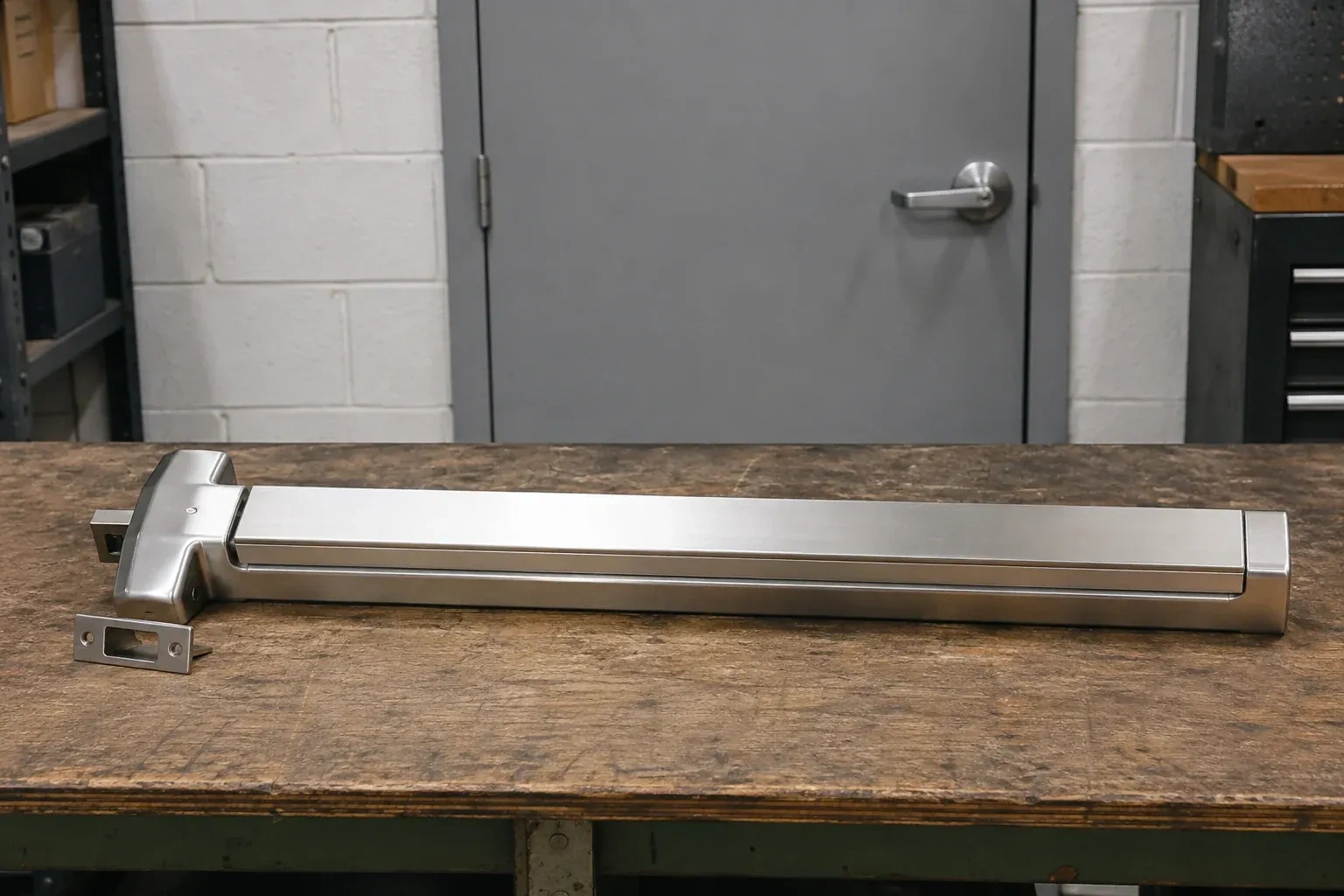
Warehouses and industrial units have wide doors, rolling shutters, padlocks on yard gates and cylinders that face the weather all year. Commercial work here is about hardware that holds up outdoors and a key plan that works for shift crews.
About 38% of homes in Niagara-on-the-Lake were built in 1980 or earlier, according to the 2021 Census.
Older frames and newer frames fail in different ways. Settled wood pulls strikes out of line; new framing settles as it dries. A locksmith used to a mixed area recognises which he is looking at and adjusts accordingly.
79%Mostly houses
Single-detached houses make up about 79% of homes in Niagara-on-the-Lake (2021 Census).
In areas of single houses, the door nobody watches is the side or back entry. It often has the weakest lock on the property. Fitting a proper deadbolt and a reinforced strike there is a modest job that closes the obvious gap.
WhyServicing the original lock is usually the better choice for an older home, for practical reasons as much as sentimental ones.
A safe sat in a late parent's basement for years, its combination known to nobody left in the family, and everyone would like to know what is actually inside…The usual fix
WhyA safe that arrives with no history at all, through an estate, an auction or a property changing hands, gets treated as an unknown until the locksmith reads it directly: the data plate, the lock type, the dial or keypad…
How do I check that the repair is holding over the following months?
Once a month for the first season, throw the deadbolt with the door closed and feel for drag or a stop short of full extension, and press on the strike and hinge screws with a screwdriver to confirm they are snug. Repeat at each change of season, since wood moves with humidity. A door that starts needing a shoulder, or a bolt that catches on the strike lip, wants a small adjustment early rather than a repeat of the original problem.
What does a higher grade of lock actually give me?
Grades follow ANSI/BHMA standards, with Grade 1 the highest and Grade 3 the lightest, and residential hardware carries a separate label that scores security, durability and finish. The grade reports how the lock performed on the standard's own operational, strength and security tests; a higher grade often comes with a longer bolt, a sturdier housing, pins that resist picking and a strike built to anchor into the framing, but those features are worth confirming on the specific model rather than assumed from the grade alone.
Will the door look any different afterwards?
Usually not, when the original case is repaired: the same knobs, escutcheons, faceplate and strike go back on in the same positions, and the only visible change is paint or grime cleared from the edges that were catching. A replacement case is chosen to match the pocket so original trim is reused wherever spacing allows, though an occasional case needs a small pocket or fixing change, explained beforehand.
How should I keep a written record of my new combination?
Somewhere away from the safe itself: a sealed note held by a manager, a separate secure file, or a password manager already used for other business records all work better than a note taped to or near the safe, which is one of the first places anyone would check. Deciding who updates that record when staff change is worth agreeing on before this visit ends.
How do you confirm I am allowed to have the locks changed?
For a business the locksmith looks for someone with standing: the owner, a director, or a manager who can show written authority from one of them. A lease, a business registration or a letter on company paper usually settles it, along with photo identification. Where doors belong to a landlord, the property manager's approval is asked for as well. This is a short step and it protects the business from having its own locks changed by the wrong person.
On-site assessment preferred
Request a visit
Call and tell us about the door. Let's sort out your door.
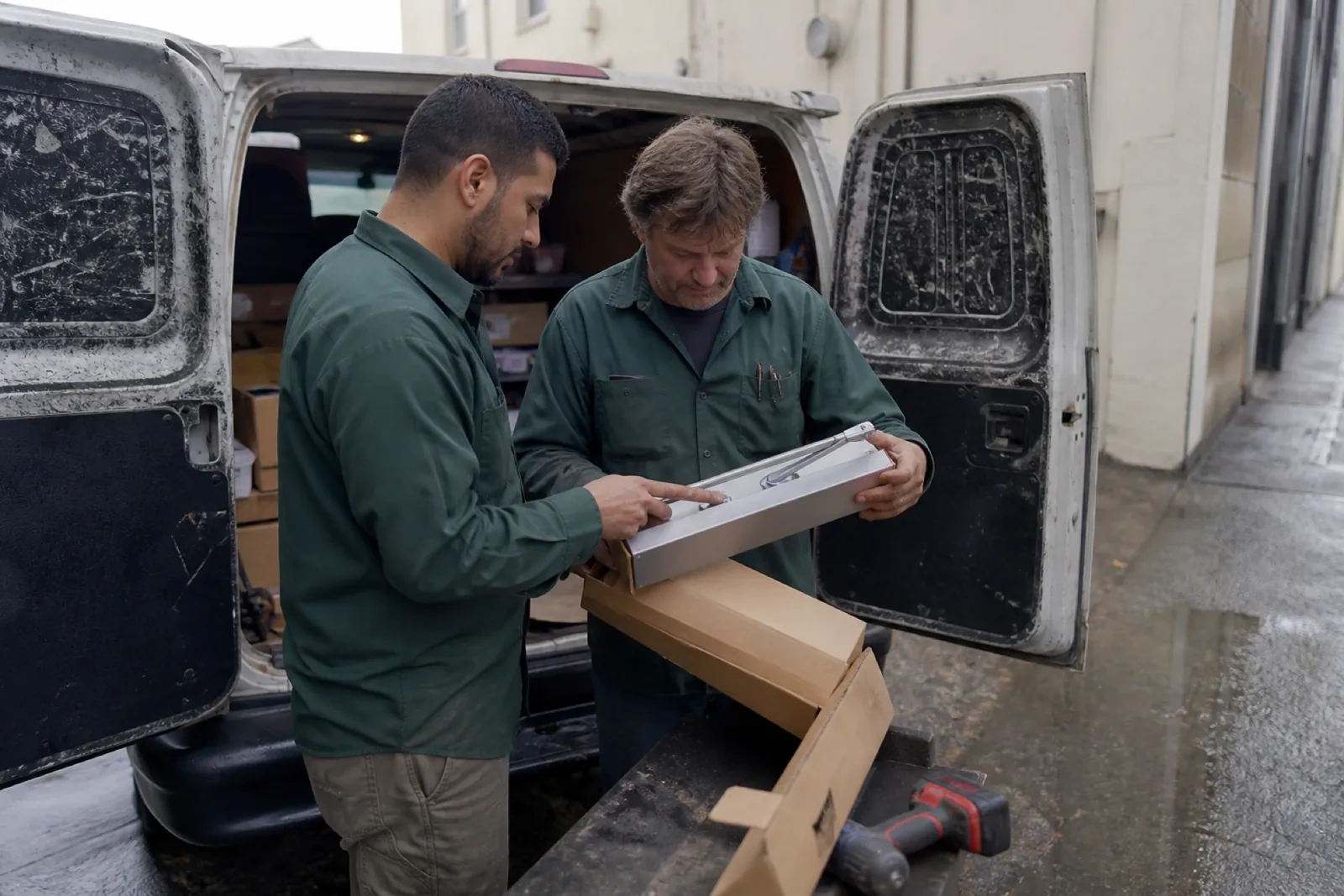
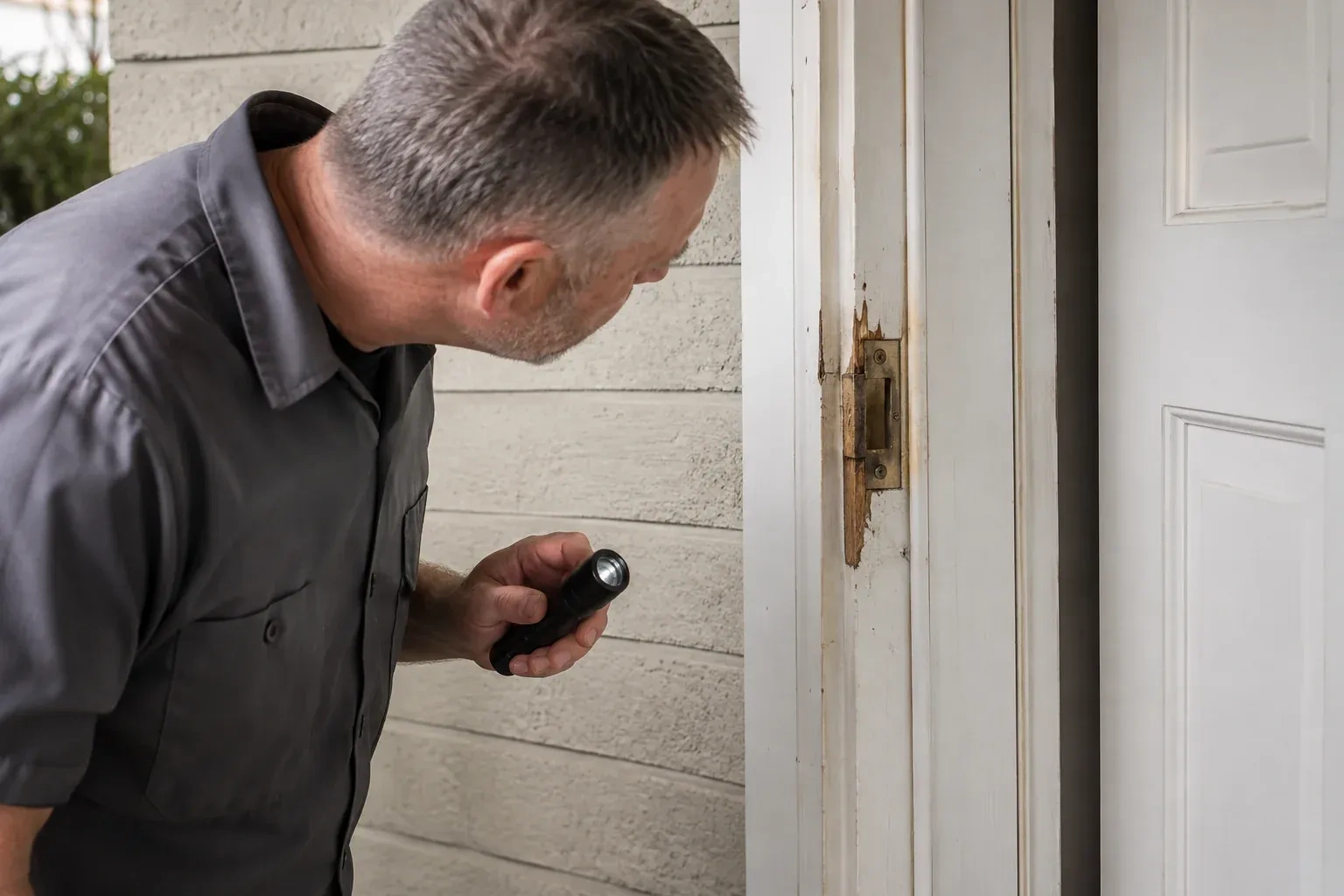 Break-In Damage Lock RepairSomeone smashed the little window beside the door, reached in and turned the thumb-turn.
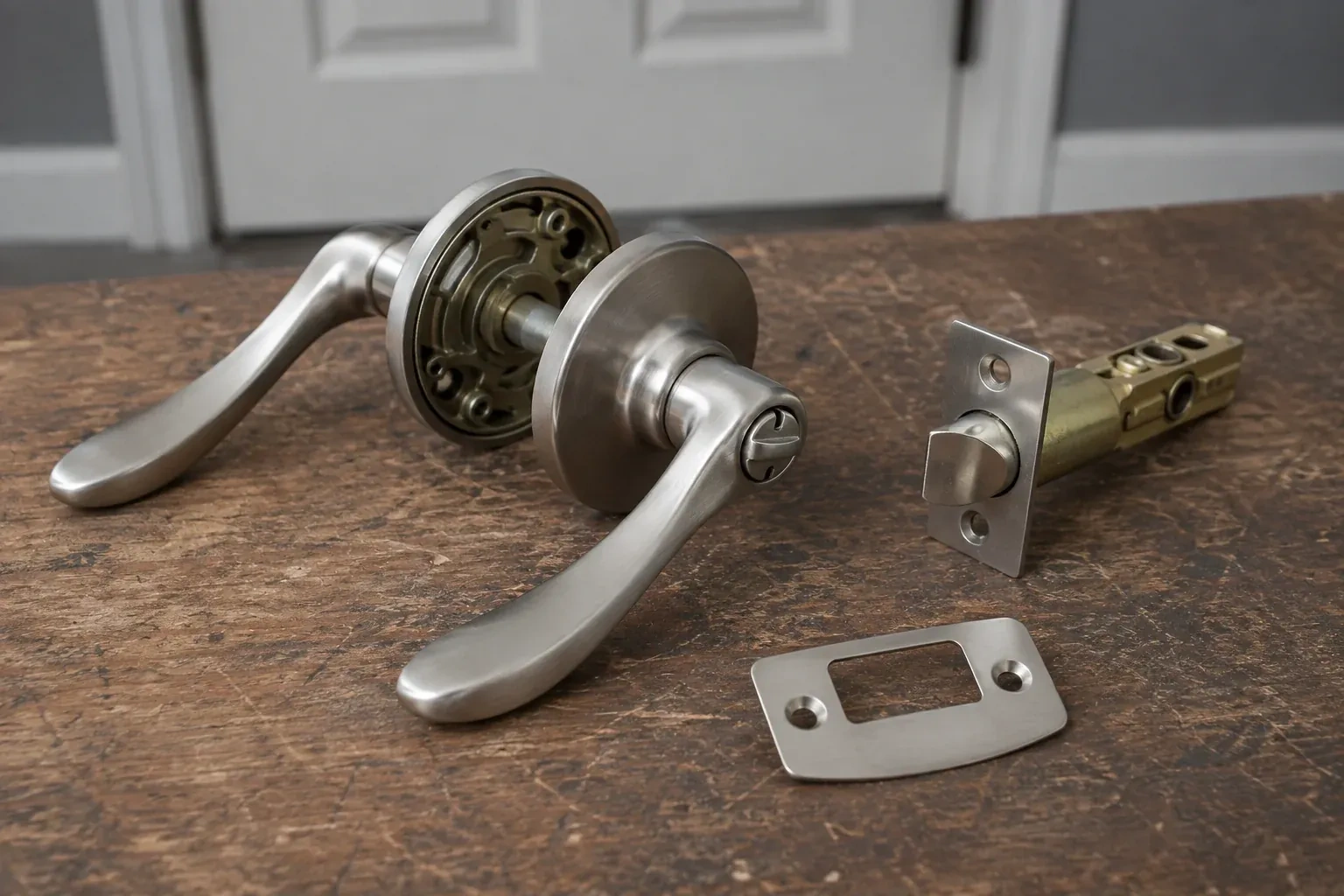 Lock Replacement & UpgradeSomeone tried the back door while you were away.
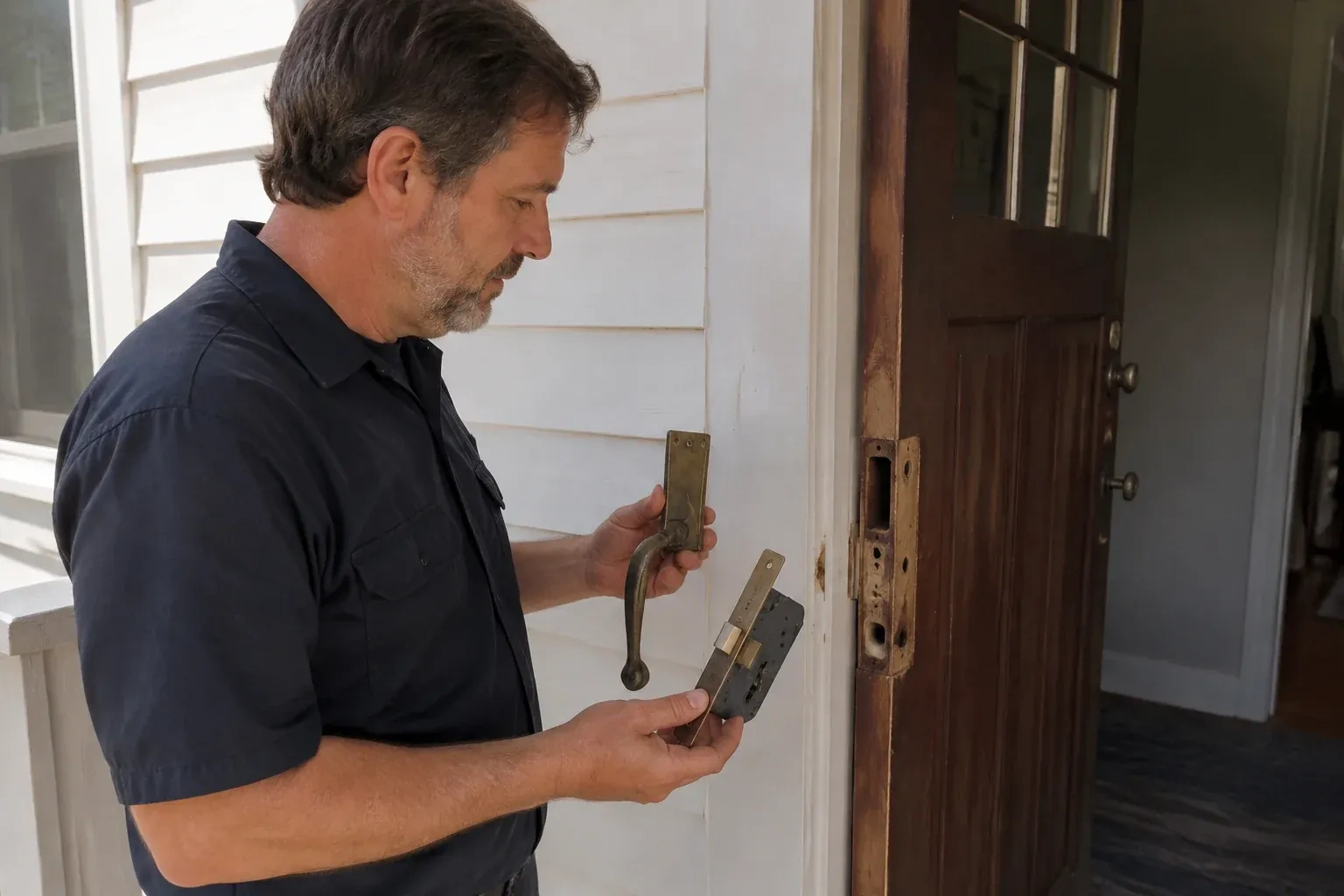 Vintage Mortise Lock ServiceThe key turns freely in the round cylinder on the door, all the way around and back, without the bolt shifting at all.
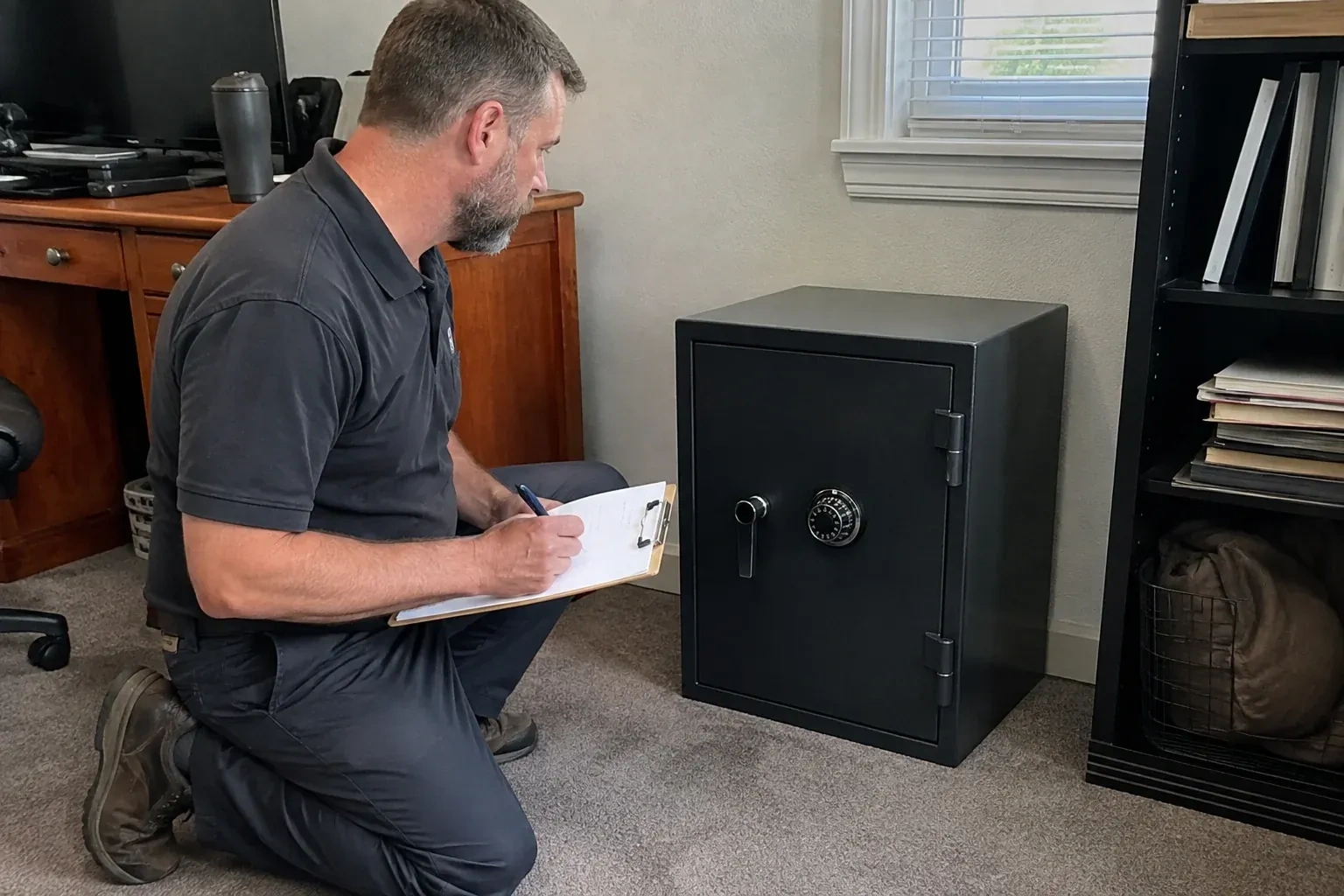 Safe Opening & Combination ChangeDecades of daily use have left the law firm's old dial safe drifting: the numbers line up close to where they should, never quite…
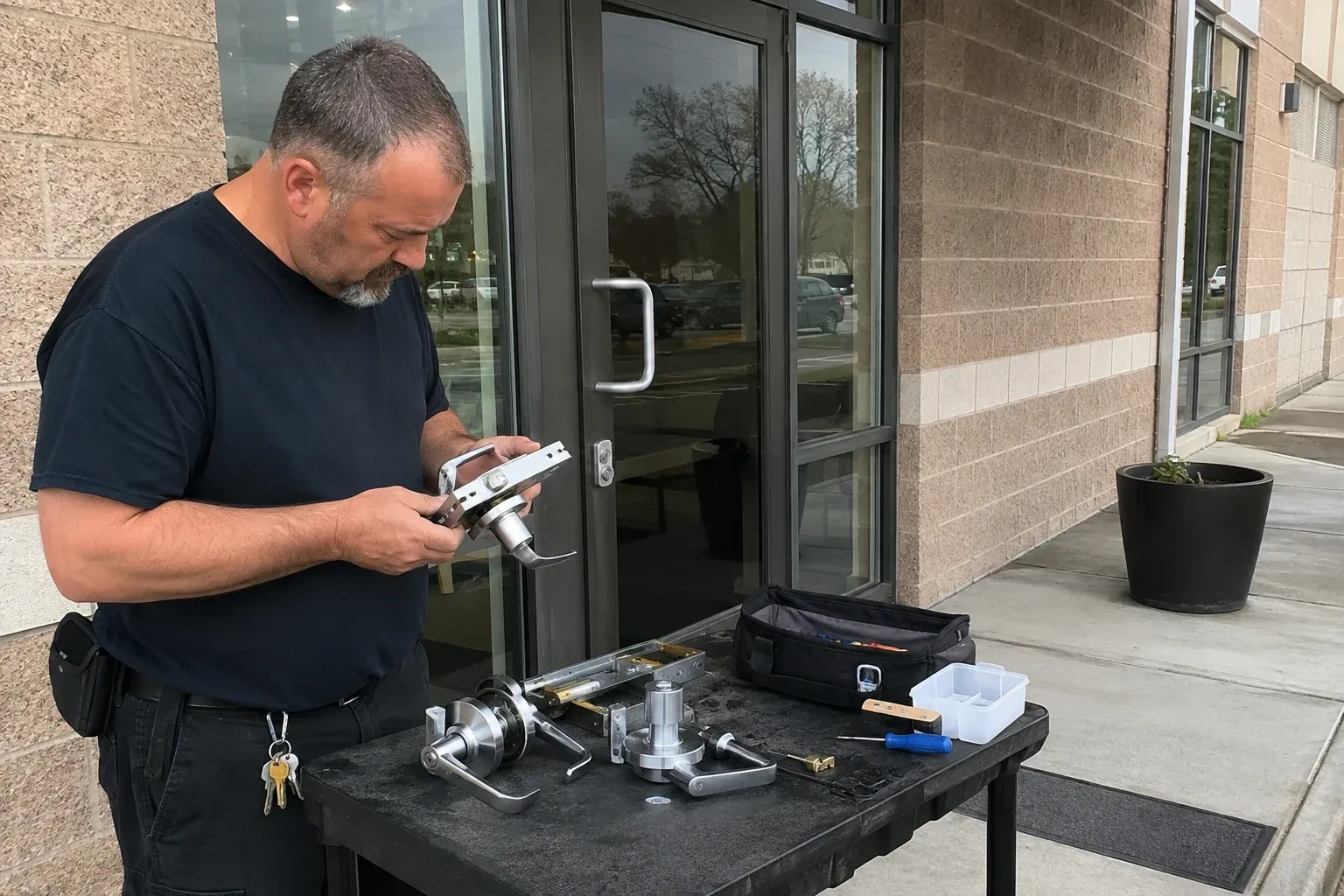 Commercial RekeyingThe drawer behind the counter holds a tangle of keys with tape labels: front old, side, Dave.
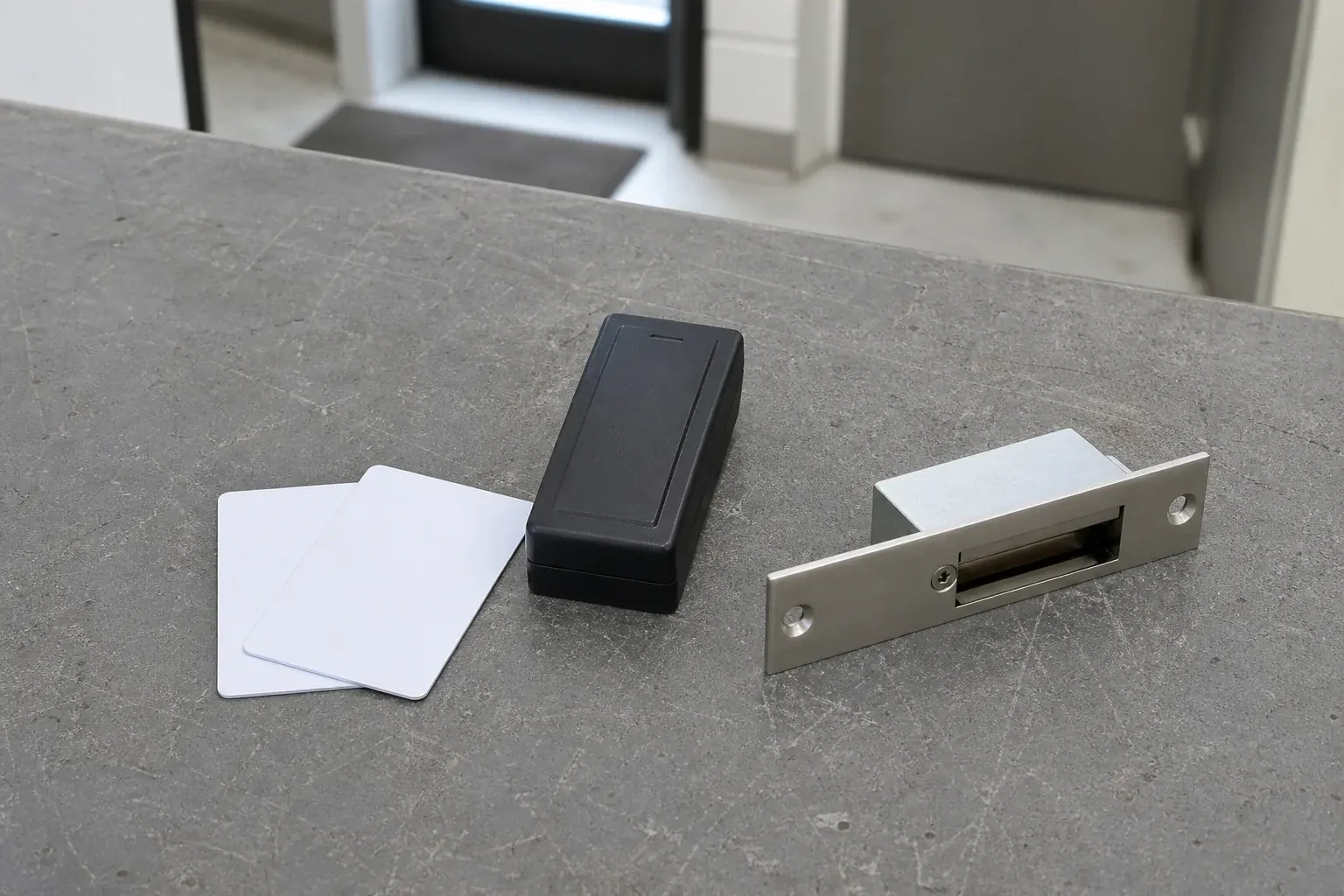 Access Control InstallationAnother employee left and the keys never came back.
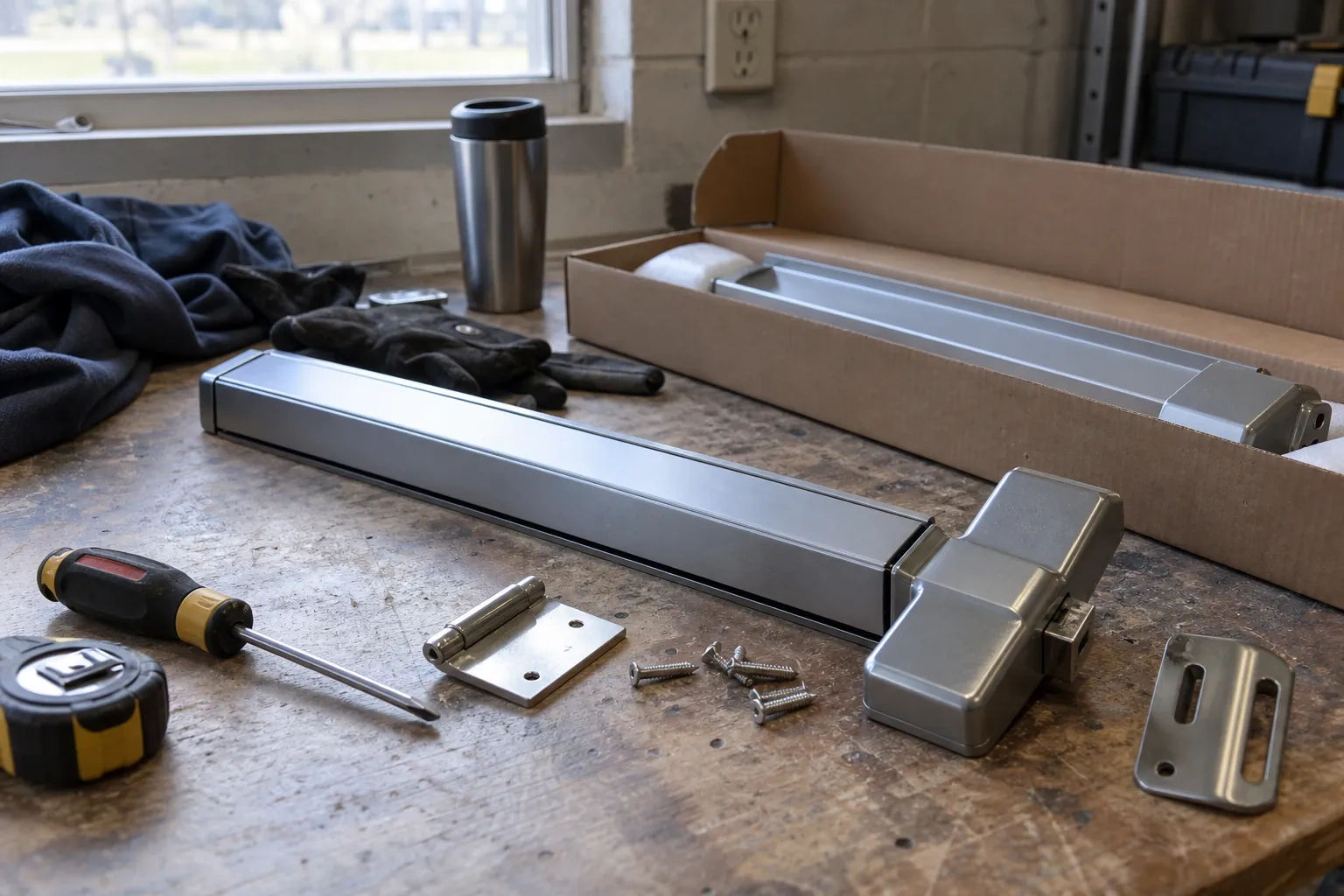
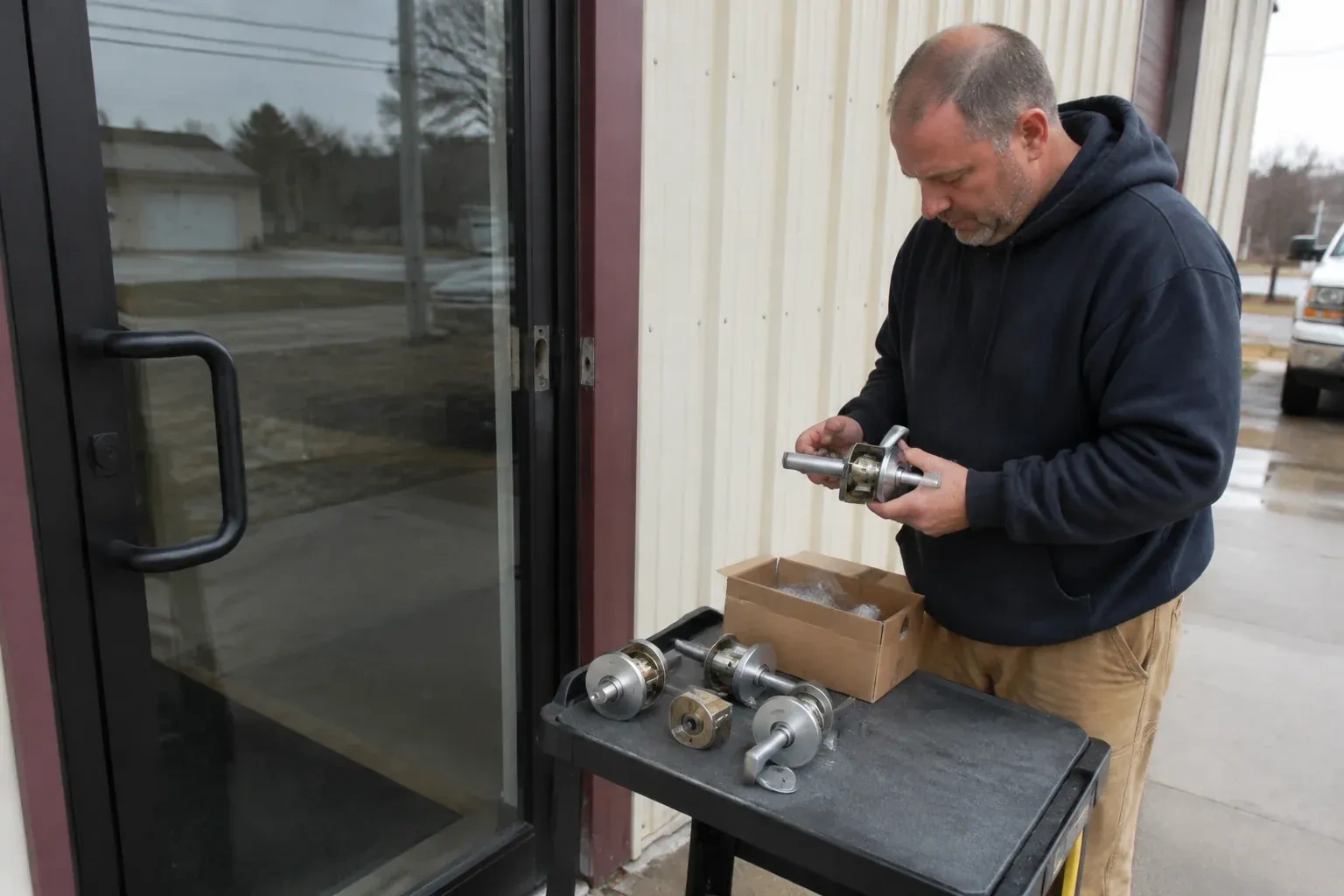 Commercial-Grade Lock ReplacementThe kitchen delivery door gets shouldered open more than a hundred times a shift, and lately the latch slips past the strike…
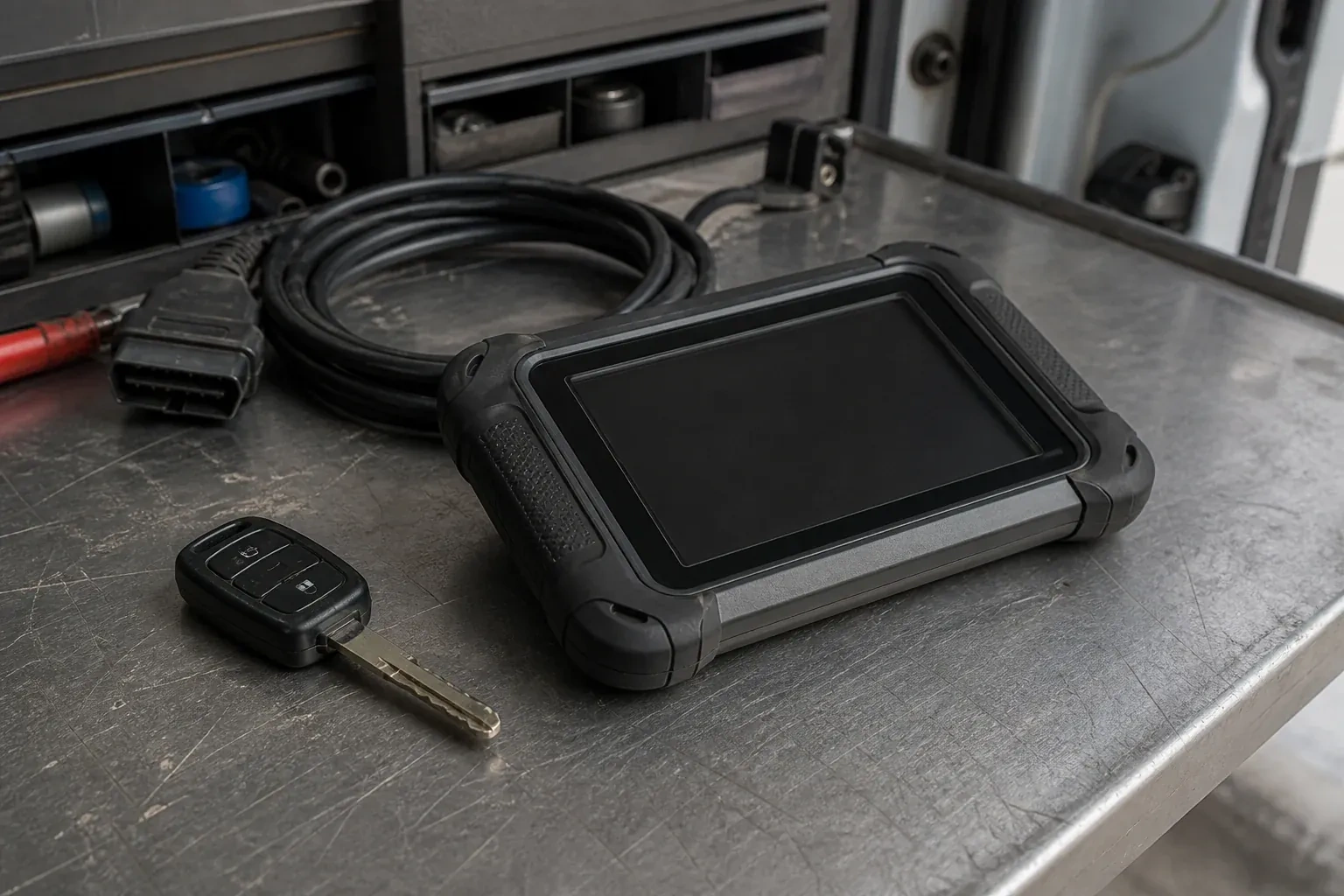 Transponder Key ProgrammingThe new key slides into the ignition and turns exactly the way the old one did, but the engine only cranks.
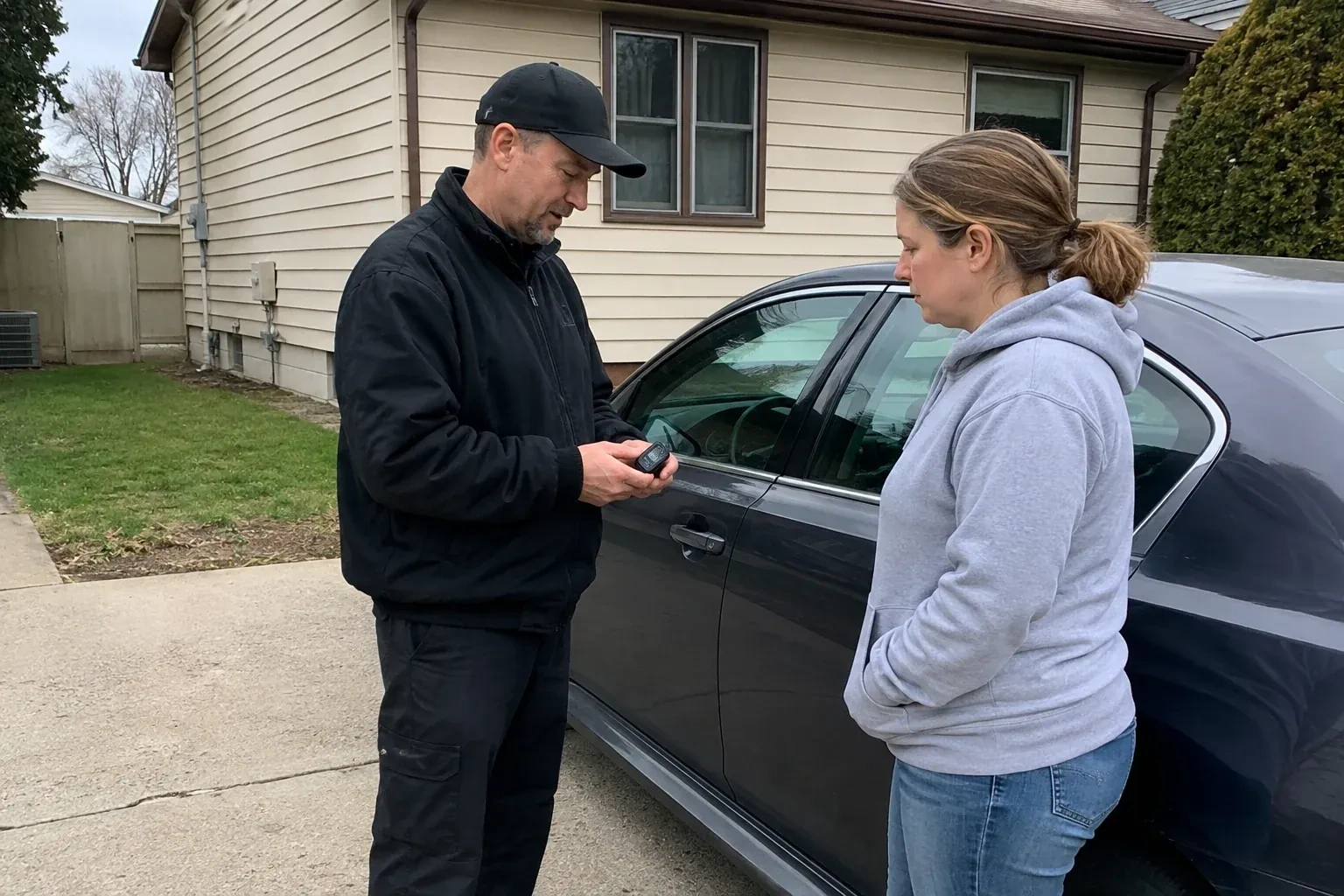 Vehicle Lock RepairYour key turns smoothly in the driver's door, the same as it always has, but the button underneath stays down and the latch never…